WRONG: Tina’s wondering if you used the 3-color swirl Aquafresh. This was old advice when toothpastes were grainy pastes, not colored gels. A brand-new mask is shipped with a protective layer of silicone covering to protect the lenses. If this coating is left on the new mask constantly fogs up. It is true that a new mask, and also a very dirty one, will benefit from a good scrub with a grainy but safe substance. We always scrub our customer’s masks with SeaBuff (a product available at the shop specifically made for new masks), or Softscrub (rinse well!), or a home-made paste of baking soda and water. Rinse very well, especially in the corners, because these substances can be harmful.
“I used a lighter to burn off the silicone! Muh-ah-ha-ha!”
Tina says, “YIKES. We are not in Mexico!” Sure, some pyromaniacs swear by a lighter to burn off and remove this silicone layer. But really: You are going to take a lighter to your new $100 mask? We are not convinced what they are wiping off is anything other than smokey lighter fluid residue.
“Hey! I take care of my mask! I dunk it in the rinse bucket with my fins after every dive!”
Well, good for you. You have now “rinsed” off the salt water and various ocean microbes… and replaced that with wetsuit shampoo, slightly diluted salt water and various ocean microbes, and maybe human pee. Put THAT on your face.
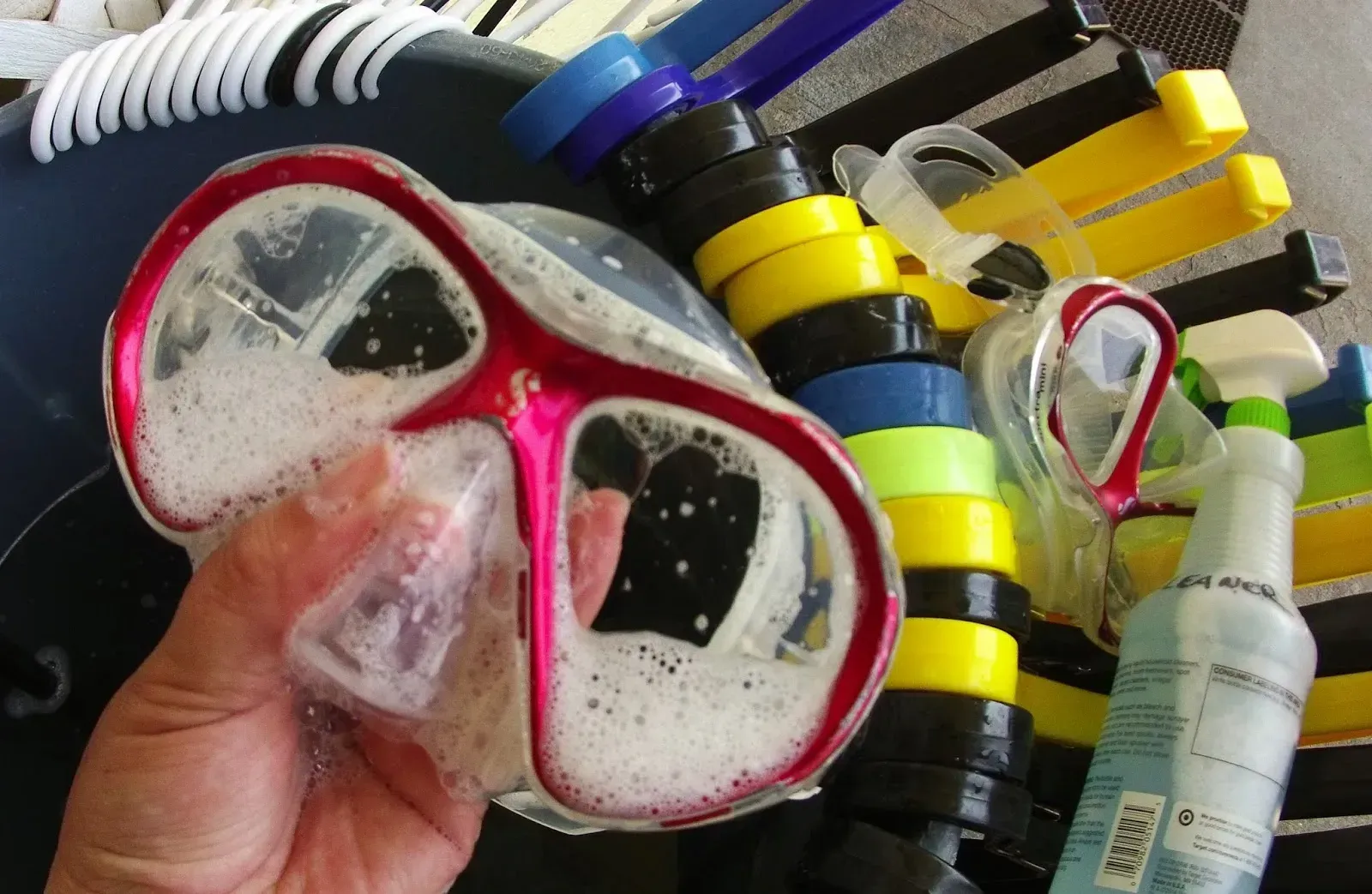
Tina makes a Blue Dawn/ Alcohol/ water mix that we call Tina’s Magical Mask Mix. But at home, you can just use dish-washing soap like blue Dawn. It cuts the grease, sunscreen and makeup and restores the clarity of the silicone mask skirt. Tina nags us to do this with every mask. After every dive. Every day. And she is right.
We scrub the soap into the silicone skirt, making sure to get the nose, sides, the second ridge along the skirt, and all the little pockets. Rinse with clear, fresh water and leave to dry.
“There are tiny gouges and holes along the edge of my mask skirt!”
If you live in Hawaii, then insects are chewing on your mask. It is like a salty, greasy gummi bear to those bugs. Face it: Wrapped in bacon and dipped in Ranch dressing and you would probably eat it, too. After a good cleaning and drying, store your mask in the box it came in- airtight and protected from hungry critters! Never store a dirty mask- set yourself up nicely for your next dive season.
“Even after a good soapy wash, my mask skirt is beyond help. It is yellow, opaque, brittle, and even feels thicker than a new mask skirt!”
A thick, yellow mask skirt has usually been stored with neoprene. Wetsuits, boots, and even neoprene mask straps that we love so much can off-gas in storage and ruin your mask. When storing your clean, dry mask in its original box, remove the neoprene strap or strap keeper! We like to seal ours in a ziplock bag and store it with your other neoprene in a separate spot.
“And what about that mold?”
Yuck. The black mold that grows in the edges! You could try the old Listerine soak, but be sure to rinse very well because Listerine can be corrosive to silicone. Or maybe taking it apart, according to manufacturers directions, and cleaning the parts. Or finally, the old stand-by: Switch to a black-skirted mask so the black mold doesn’t show!
If left in your mask, the mold will eat away at the silicone until a pit develops, then a hole. Just ask Scott. Tina had to steal his mask and take it straight to the health department.
Don’t make Tina call the Health Department on you!
PRO-TIP: If you are de-fogging your mask by spitting in it, then you are causing that black mold in the corners! Ewwww! But stay tuned: