



Science Friday 006: Reef Builders
Dive Curious. Discover what others miss.
Mission Recap
We spend a lot of time looking at what lives on a coral reef. For this Science Friday, we wanted to pay more attention to the animals actually building it. Our mission for Reef Builders focused on two of Hawaiʻi’s massive corals: Lobe Coral ( Porites lobata ) and Mound Coral ( Porites evermanni ). Rather than simply identifying them, we looked at the physical structure these corals create, the animals using that structure as habitat, and what happens when years of slow reef growth meet the force of a powerful storm.
Over two dives, we found fish moving around large coral colonies, invertebrates occupying their holes and crevices, and sections of reef that had clearly taken a beating from the recent storm. It was a good reminder that a coral reef is both living habitat and physical structure, and the two are inseparable.
Building the Reef One Polyp at a Time
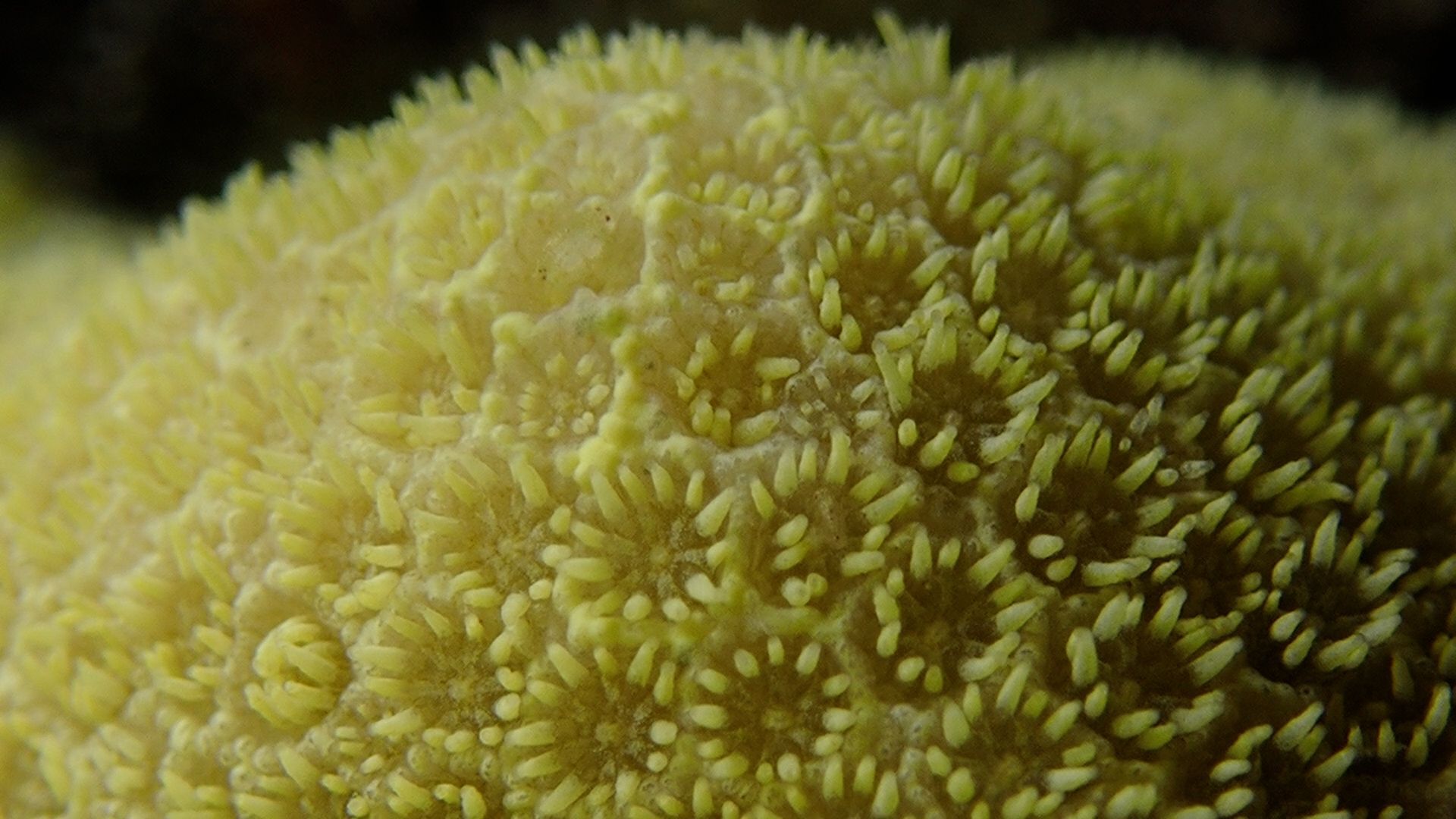
A massive Porites colony can look like a single large animal, but it is actually made up of thousands of individual coral polyps living together.
Each tiny polyp secretes a calcium carbonate skeleton beneath itself. As the colony grows, new skeletal material is added. Over years, those skeletons accumulate into the hard framework we recognize as a coral reef.
What makes it remarkable is the difference in scale. A coral polyp may only be millimeters across, yet the skeletal material produced by countless polyps over time can become part of a reef stretching across an entire coastline.
In Hawaiʻi, Lobe Coral is one of the dominant reef-building corals, particularly across many shallow and moderately deep reef habitats. Along the Kohala coast, it can form extensive colonies across the volcanic formed “basalt rock” reef surface.
On our dives, we were observing both living animals and construction in progress.
Building Habitat
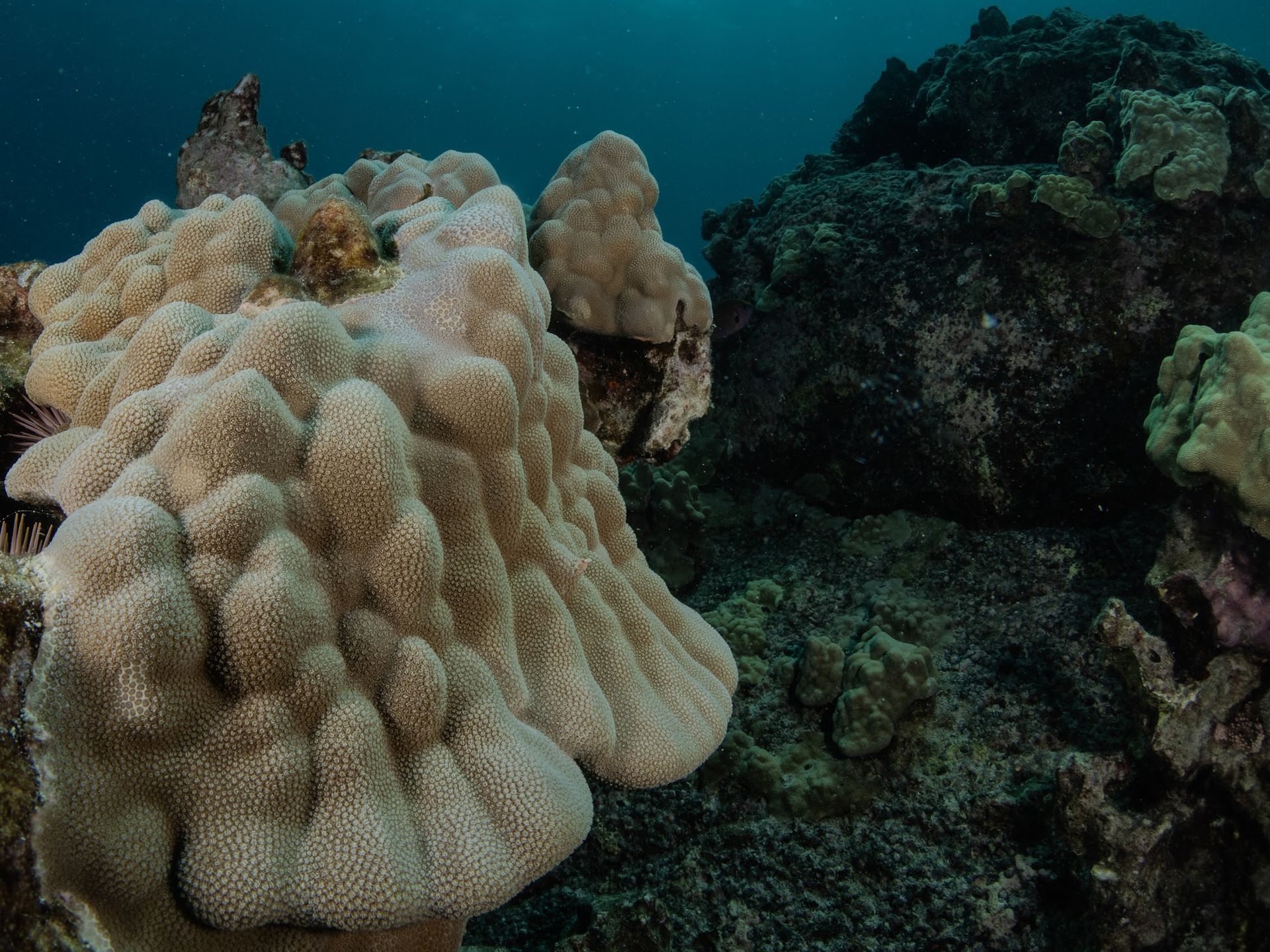
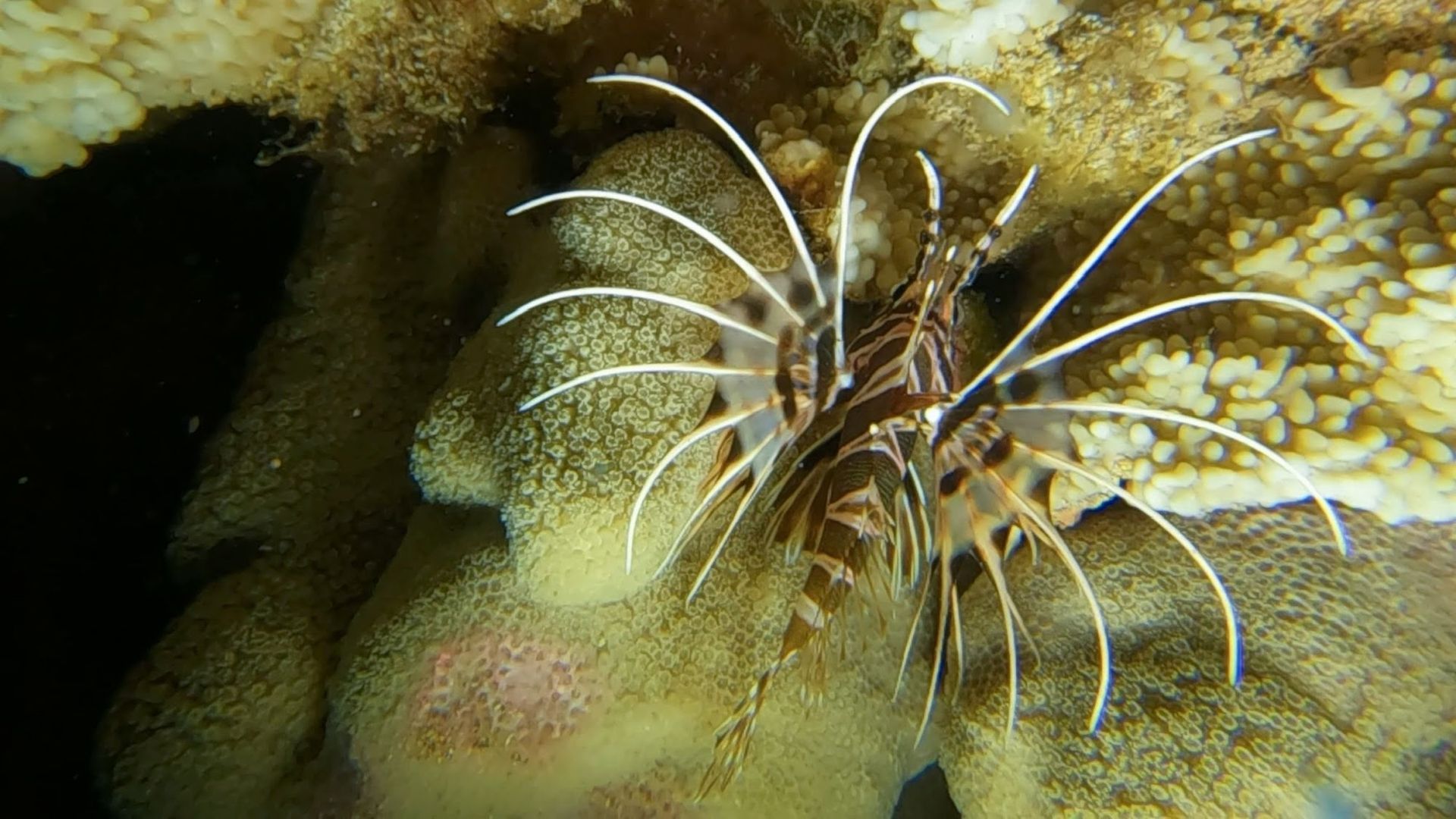
As we moved around the colonies, it became easy to see that coral growth creates much more than coral. The spaces between colonies add structural complexity to the reef. Small fish retreat into those spaces when threatened, while invertebrates occupy holes that would not exist on a flat surface. Other organisms attach themselves to the hard substrate or use the reef as a place to feed, reproduce, or shelter. A large coral colony therefore changes the amount of usable habitat available within the same patch of ocean floor.
That is one reason reef-building corals have such an outsized influence on the community around them. The corals are animals themselves, but the skeletons they construct become habitat for countless others.
A Reef Between the Waves and the Shore
The same three-dimensional structure also affects something much larger than the animals living within it. It also changes the way waves move toward shore.
When incoming waves encounter a shallow, complex reef, they begin to break and lose energy. The roughness and shape of the reef create friction and turbulence that further dissipate that energy before the remaining wave reaches the coastline. Globally, coral reefs can dissipate as much as 97% of incident wave energy, although the amount varies considerably with reef shape, depth, wave conditions, and other characteristics. So the calcium carbonate being deposited beneath a coral polyp today can eventually become part of a much larger structure that helps buffer our shorelines from waves, flooding, and erosion.
This connection was especially noticeable during this mission because some of the reef we explored had recently experienced the other side of that relationship.
When the Reef Takes the Hit
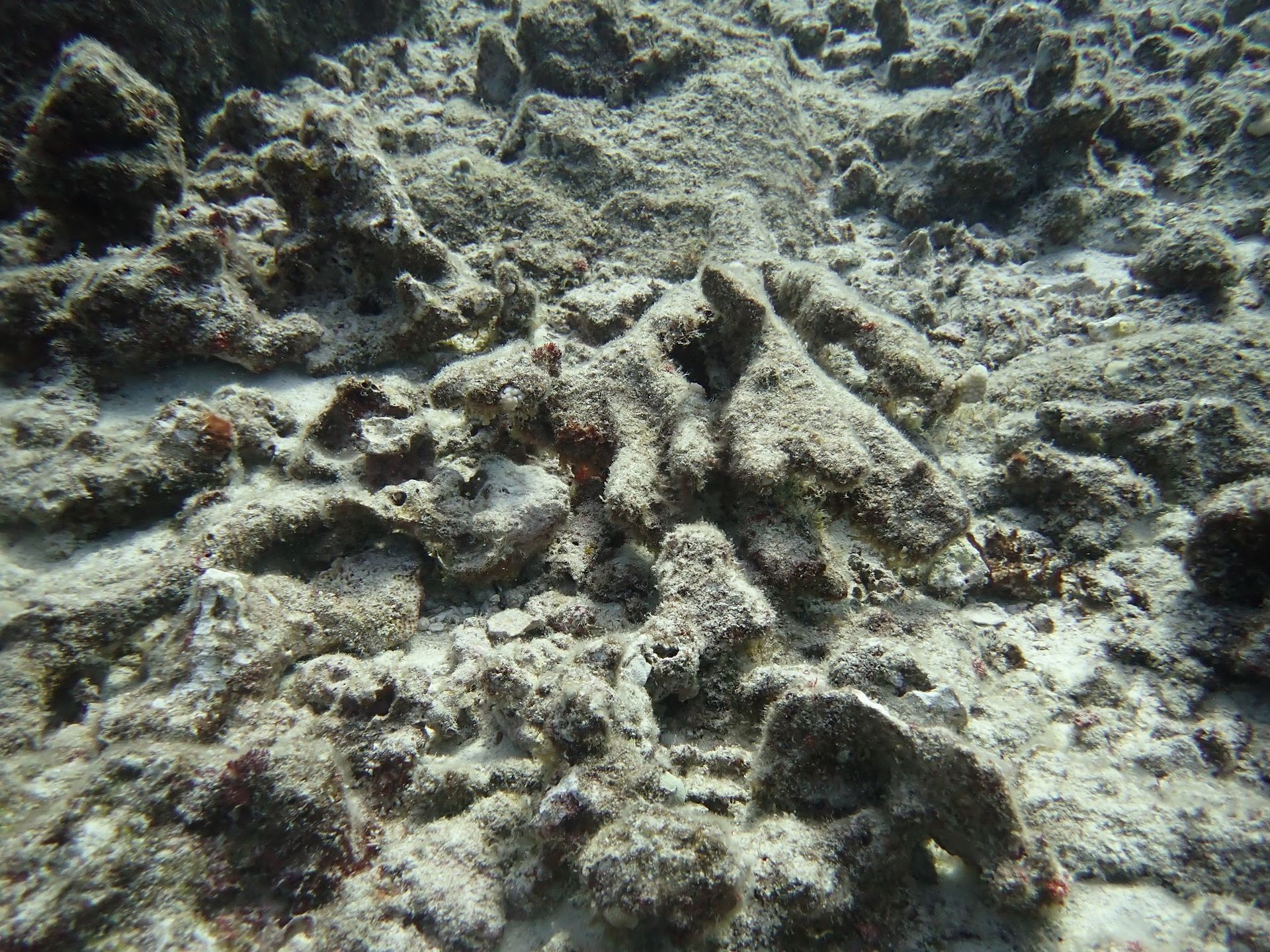
Some of the coral colonies we encountered were beat up from the recent storms this season. While much of our reef system is still intact, we did observe damaged surfaces and areas where the physical force moving across the reef had clearly left its mark.
Storms are a natural part of coral reef environments, and wave energy can break colonies, abrade living tissue, overturn coral, or move pieces of reef downslope. Along the Kohala Coast, episodic storm damage is one of the natural processes that influences where corals grow and how reef communities develop. However, while the reef protects the shoreline by taking energy out of incoming waves, in doing so, the reef itself is exposed to those forces.
A massive colony may have spent decades slowly depositing its skeleton, only for a single large wave event to remove part of that growth in seconds.
The question then becomes what happens afterward.
What We’re Still Wondering
Looking at the storm damage raised the question we left with this week:
What does a damaged reef need in order to recover?
There is not one single process we can call “growing back.” If part of a colony is damaged but living coral tissue remains, surviving tissue may continue growing and can gradually regenerate over portions of the damaged area. If a colony is lost completely, recovery depends much more heavily on coral larva recruitment. Either way, the conditions surrounding the coral matter.
Generally speaking, corals have a better opportunity to recover when they have stable hard substrate, suitable light and water movement, good water quality, temperatures that remain within their tolerable range, and relatively low levels of sediment and pollution. Excessive sediment can cover suitable settlement surfaces and interfere with coral recruitment, while elevated nutrients can encourage algal growth that competes with young corals for space. Hawaiian studies have found that reduced sedimentation can improve coral recruitment and contribute to long-term reef recovery. Herbivores including surgeonfish, parrotfish, urchins, and other grazers help control algae that might otherwise occupy newly exposed substrate. Reefs with more herbivorous fishes and fewer land-based impacts experienced lower coral mortality and better recovery following disturbance.
The other factor is time. Coral recovering from one disturbance has a much better chance if another major storm, bleaching event, or other stress does not immediately follow. Long-term research in Hawaiʻi has shown that reefs can recover after severe disturbance, but repeated storms and bleaching events can interrupt that recovery before it is complete.
There are plenty of reasons for optimism. Even after significant disturbance, the process of rebuilding begins, again. Coral reefs are dynamic systems, and when environmental conditions improve, corals respond in meaningful ways. Surviving colonies repair damaged tissue, while coral larvae settle into newly available space, and healthy grazing communities help keep algae from overwhelming areas where new coral growth might begin.
Look at What the Coral Has Built
The next time you swim past a large coral colony, look beyond its color and try to see its structure. What appears to us as a large piece of reef is the accumulated work of countless tiny coral polyps, each adding another small amount of calcium carbonate to the structure beneath them. A storm may break part of it apart, a new coral may eventually grow in that space, and somewhere along the way, that structure becomes habitat for another animal and part of the barrier standing between an incoming wave and the shore. Sometimes understanding a coral reef means looking at the smallest animal on it and recognizing the enormous structure it is capable of building.
Join Us for Science Friday
Science Friday is one of our Themed Dive Days . To save your spot, call us at (808) 882-7774 or book online below.
Happy Diving!
-B
Kohala Divers Science Fridays
Dive curious. Discover what others miss.
Come Dive With Us
Science Fridays happen on our two-site morning charter. Two dives, two different sites, and a mission that gives you something to look for on both of them.
You don't need to be a marine biologist or know the name of every fish. Just bring your curiosity, slow down a little, and start asking questions about what you are seeing. That is really all it takes!
There is always something happening out there. Come find out what.