



Science Friday 003: The Grazers
Dive Curious. Discover what others miss.
Mission Recap
There are a lot of organisms eating algae on a coral reef, but they are not all doing the same ecological job.
Rather than simply looking for herbivores, our mission was to observe different grazers and compare how each one removes material from the reef.
Over two dives, we came across a variety of grazers, from yellow tangs, to goldring surgeonfish, to parrotfish, to urchins. All of them interact with algae in some way, but once we began paying closer attention to how they feed, the word “grazer” became more complex.
Not All Grazers Graze the Same Way
Herbivory is one of the processes that helps to shape a coral reef. By removing algae, herbivores can influence how much space and light are available on the reef and which organisms are able to occupy the substrate. But different herbivores target different types of algae and remove them in different ways.
Some fish crop algae from the surface, while others scrape tightly attached algal turf from hard substrate. Some browse larger fleshy algae. Sea urchins use a five-toothed feeding structure rasp material from the reef. So instead of asking, “What is eating algae?”, we began to ask a more useful questions:
What does each feeding strategy do to the reef surface?
Parrotfish Scraping the Reef
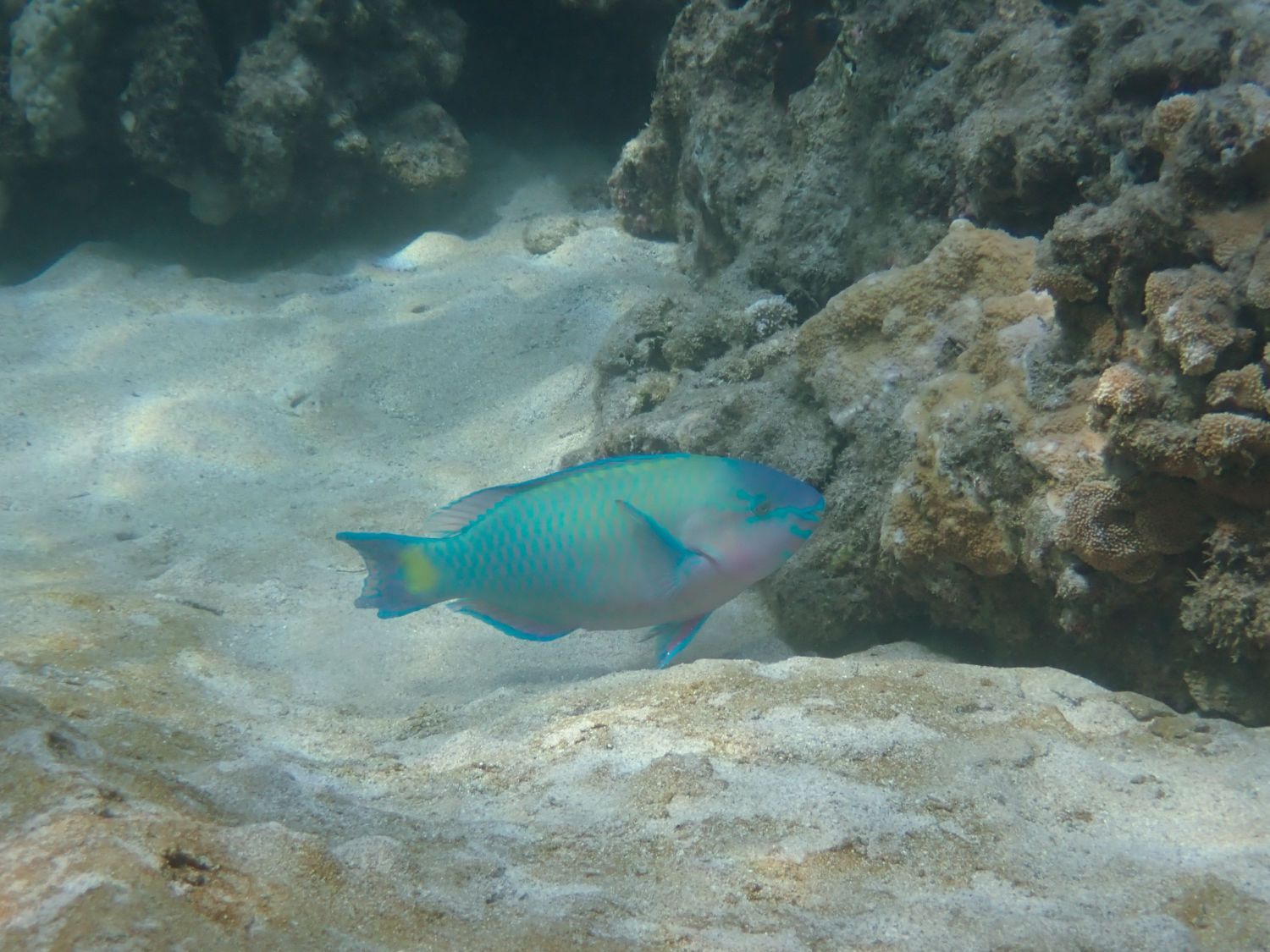
Parrotfish gave us one of the clearest examples. We observed them repeatedly place their beak-like mouths against the reef, take a bite, and move on. Their teeth are fused into strong dental plates (like a parrot’s beak) that allow them to scrape material from hard reef surfaces. Their bites can remove algal turf and sometimes a small amount of the calcium carbonate substrate beneath it. This distinction is important as a parrotfish is not just shortening algae. Scraping can expose areas of relatively clean hard substrate. Those open surfaces may provide places where coral larvae can settle and begin the process of colonization.
A Yellow Tang Takes a Different Bite
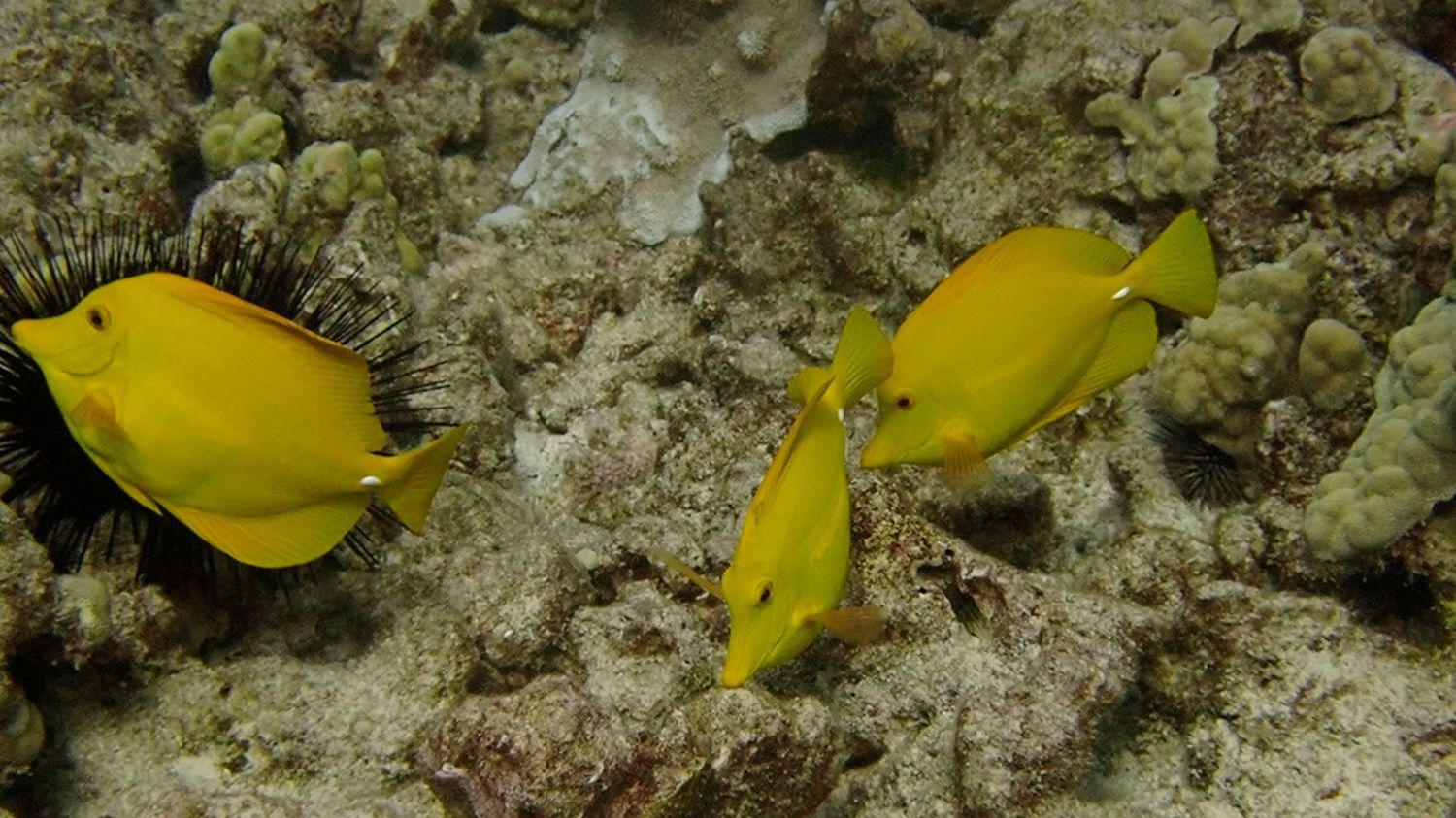
Yellow tangs were also feeding on algae, but their bites had a different effect. Rather than scraping into the reef surface, Yellow Tangs use their mouths and closely spaced teeth to crop filamentous and turf-forming algae growing across the substrate. By repeatedly cropping these algal turfs, Yellow Tangs can help keep them short and reduce the ability of algae to overgrow or monopolize space on the reef. That continued maintenance can influence competition for space between algae, corals, and other organisms trying to occupy the same hard substrate.
The Fish With Its Own Farm
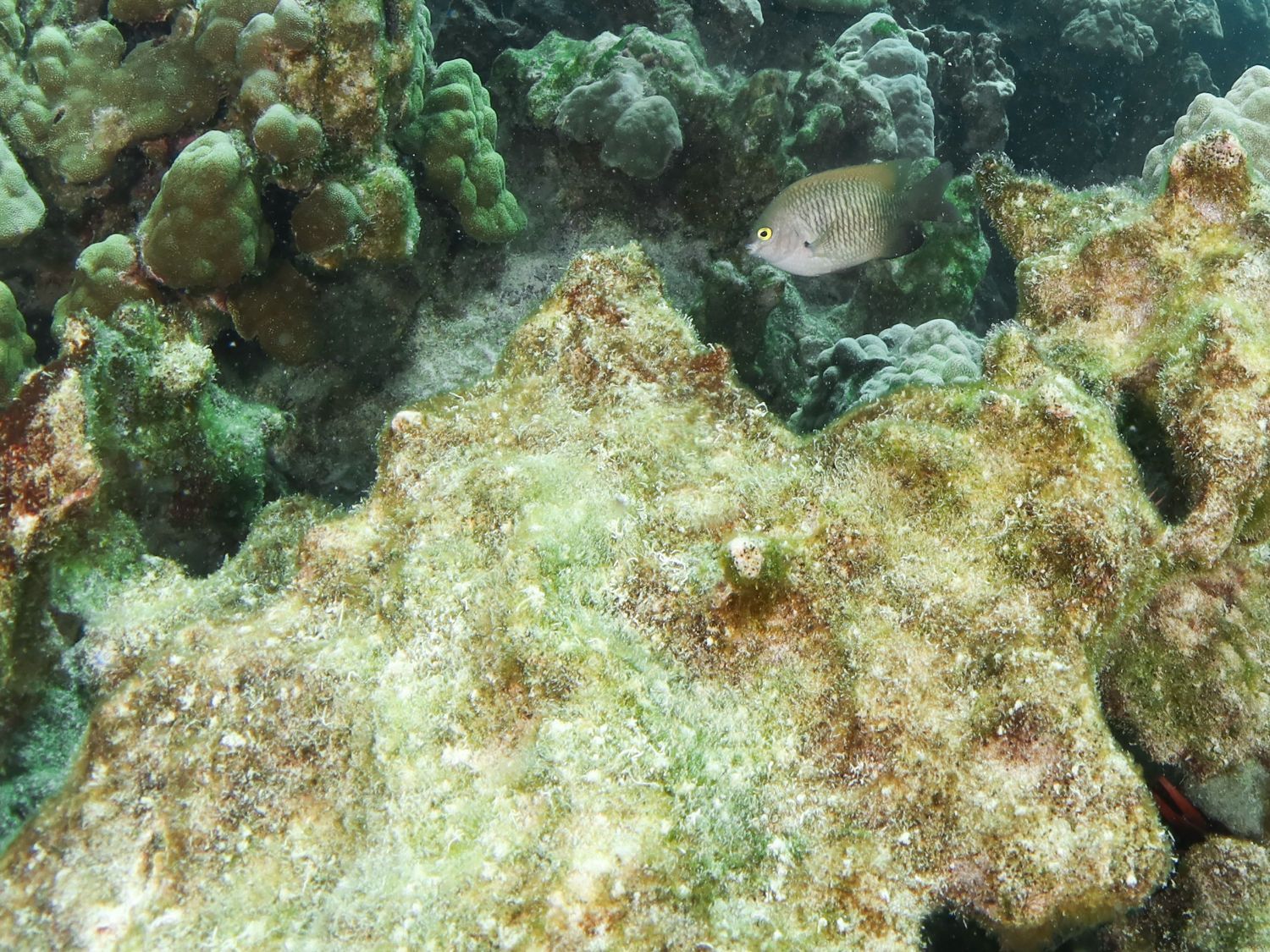
Most of the herbivorous fish we were watching moved across the reef in search of food. The Hawaiian Gregory was doing something very different. It stayed close to a small patch of algae, repeatedly tending the area and aggressively defending it. We watched this relatively small damselfish chase surgeonfish away when they attempted to move into its territory. Hawaiian Gregories are territorial damselfish that maintain patches of algal growth within their territories. This behavior is often described as algal farming.
By feeding within the territory while excluding other herbivores, the fish can influence both the amount and composition of algae growing inside its defended patch. Watching one small fish repeatedly drive away much larger surgeonfish was a reminder that grazing patterns are shaped by more than mouths and teeth. Behavior determines who gets to feed where.
Grazing Without a Fish
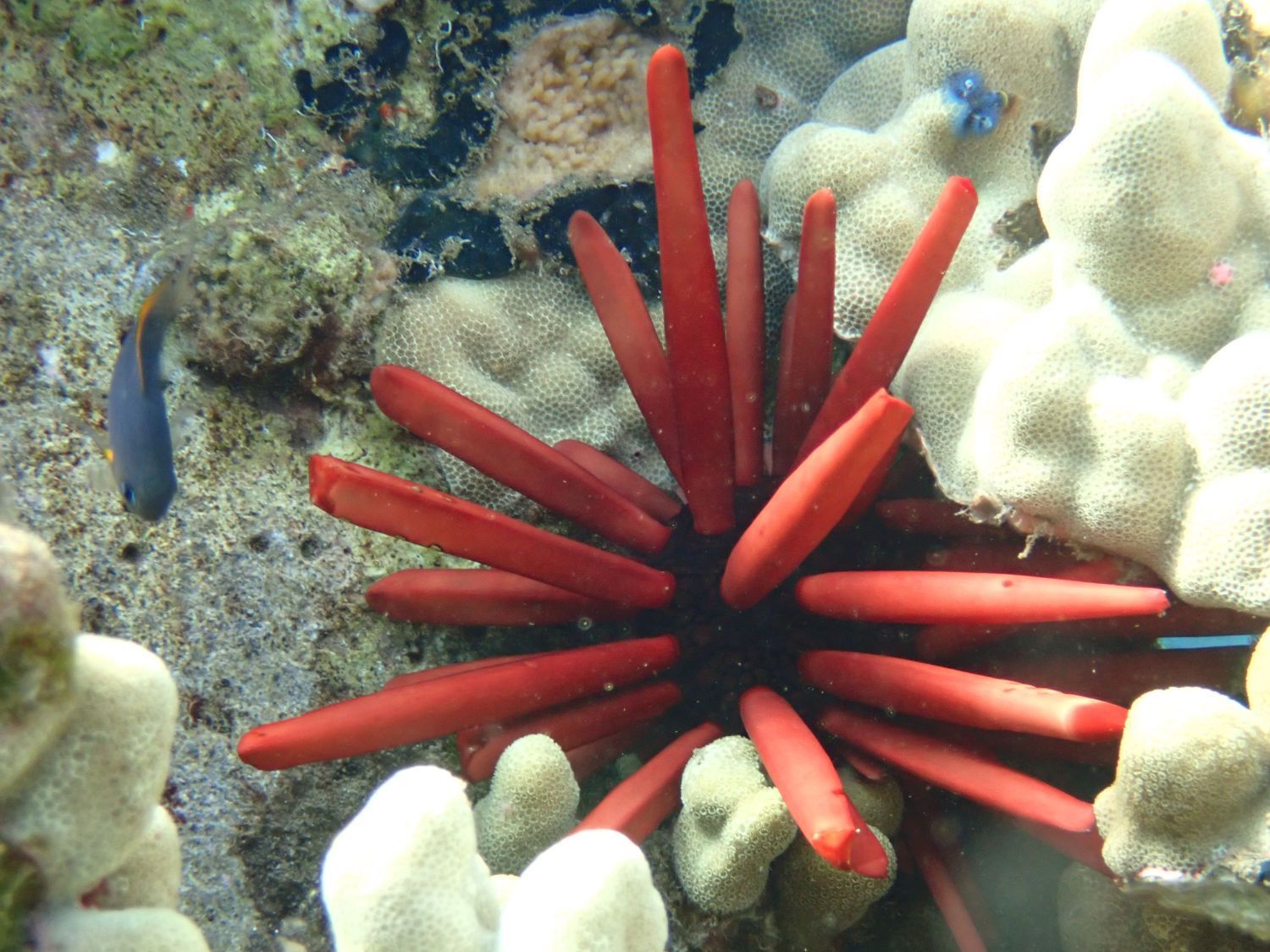
Fish were only part of the story. We also encountered longspined, banded, pencil, and collector urchins. Sea urchins feed using Aristotle’s lantern, a complex arrangement of five continuously growing teeth located on their underside. As the urchin moves across the reef, these teeth can scrape and rasp algal and other material from hard surfaces.
The longspined urchins we encountered can be especially effective at removing algal turf and fleshy algae, sometimes grazing very close to the underlying reef surface. Pencil urchins, are also strong benthic grazers, but their feeding ecology is somewhat different. They consume algae directly from hard substrate, including crustose coralline algae and other attached algal growth. In high population density areas, the substrate can have very little algal turf. While urchins grazing can substantially reduce algal cover, intense grazing can also contribute to bioerosion and disturb newly settled corals.
While we watched the urchins, something else stood out. The longspined urchins were gathered tightly together in the open. The pencil urchins were tucked back into holes and crevices within the reef. Both were grazers, but their very different appearances and positioning raised another question.
What We’re Still Wondering
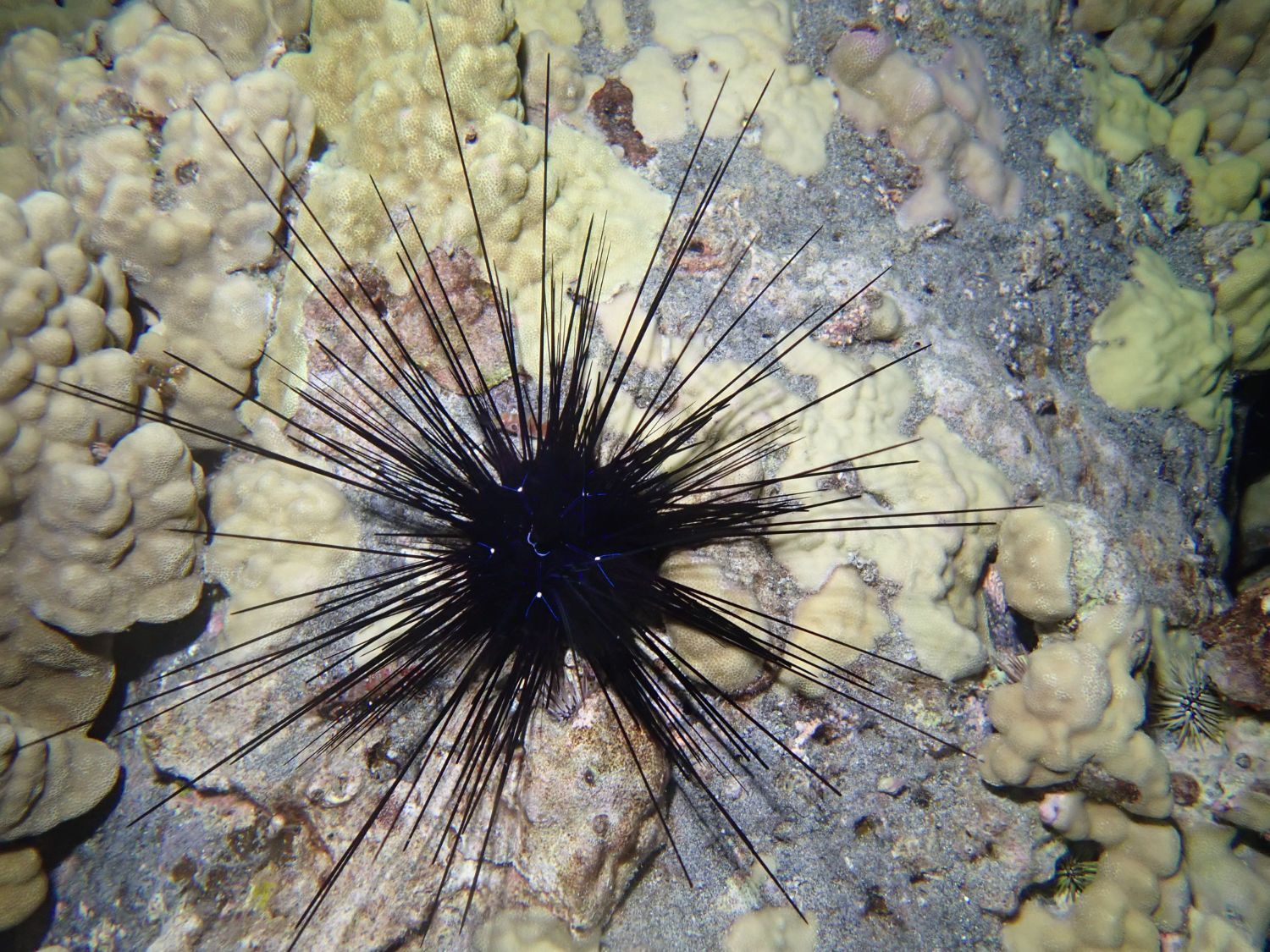
Stacy asked, “Why do longspined urchin and pencil urchin spines look so different?” A longspined urchin and a pencil urchin both use the same basic type of feeding apparatus, but their defensive structures look dramatically different.
Longspined urchins are surrounded by numerous long, narrow spines. These increase the effective distance between the urchin’s body and a potential predator. Pencil urchins take a very different form. Their primary spines are short, extremely thick, and blunt. During our dives, the behavioral contrast was just as noticeable as the structural one.
The longspined urchins were clustered together in relatively exposed areas, while the pencil urchins were wedged securely into the reef. Lonspined urchins aggregate during the day as an anti-predator strategy. When several individuals huddle together, their long spines overlap and create a larger defensive barrier, making it harder for predators to reach their vulnerable tests (shells).
Pencil urchins use a different strategy. Their short, thick spines are well suited for bracing themselves tightly against the reef. During the day, they commonly shelter in holes and crevices where their body is difficult for predators to reach. They tend to become more active after dark, leaving shelter to graze when their daytime predators have gone to sleep.
On our first dive, a manta ray graced us with its presence, which led Mo to ask another question, “Are manta rays grazers?”
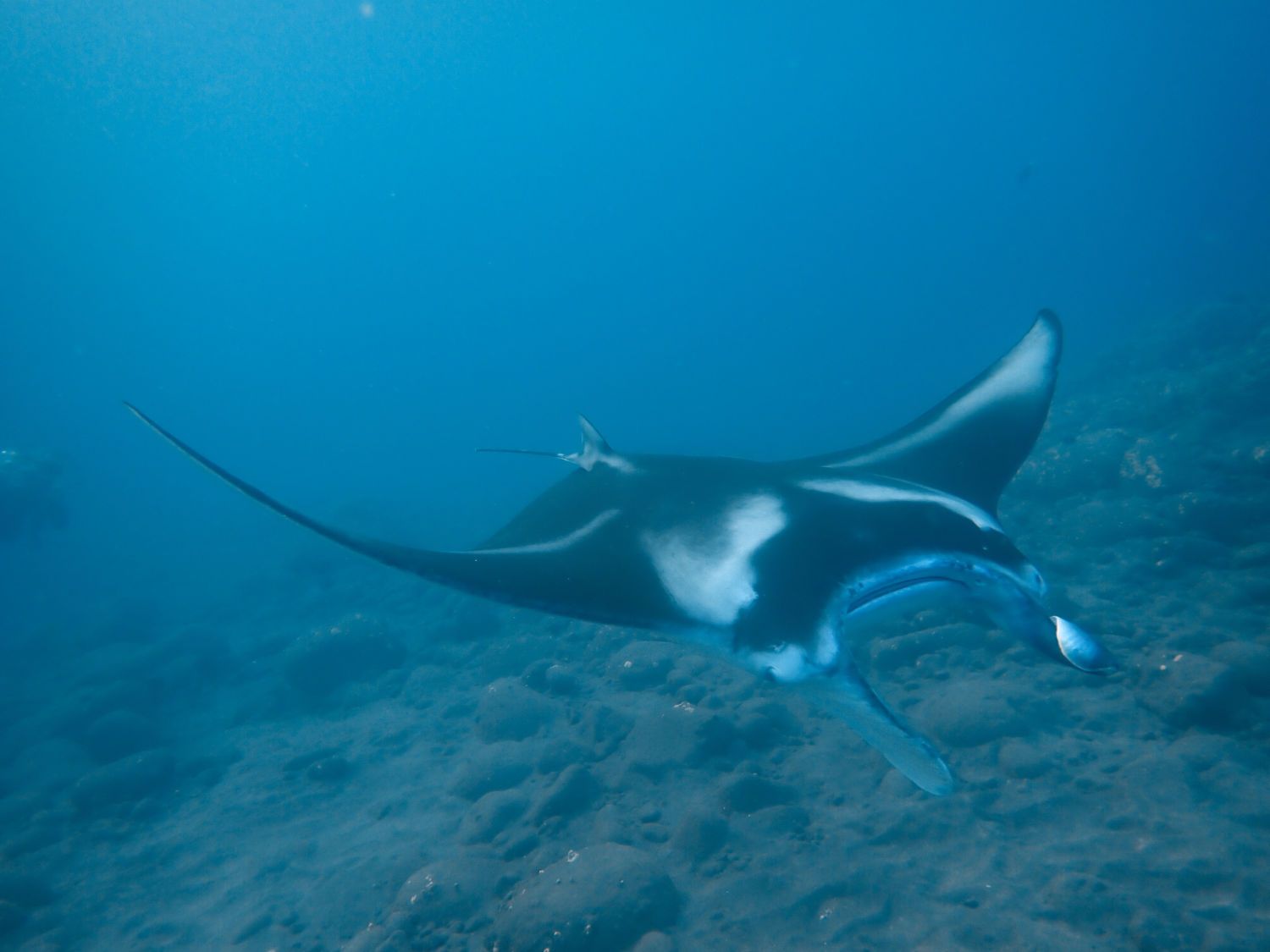
The grazers we had been observing obtain food from a surface. They bite, crop, scrape, or rasp algae and other material attached to the reef. Manta rays are planktivorous filter feeders, and thus use a different feeding strategy. They swim through plankton-rich water with their mouths open. Their cephalic lobes help direct water and suspended particles toward their mouth, while specialized filtering structures called gill rakers to retain plankton as the water passes through their gills. So while both manta rays and reef grazers spend a great deal of time feeding, they occupy very different trophic roles. A grazer removes food attached to a surface. A manta (and other filter feeders like christmas tree worms) filter food suspended in the water column.
Mo’s question gave us a useful reminder: describing what an animal eats is only part of understanding its ecological role.
The next time you see a fish eating algae, resist the temptation to identify it and keep swimming. Watch its mouth. Look to see if it is cropping algae from the surface, scraping the substrate, browsing larger algae, rasping the reef, defending a feeding territory, or something completely different.
The organisms we call The Grazers are performing different ecological functions with every bite. Once we start watching how animals feed instead of simply noticing that they are feeding, the reef becomes a much more interesting place.
Next Science Friday:
Mission 004: Hidden in the Reef
This Friday, September 11th, 2026 we are changing where we look. Instead of watching the animals moving across the surface of the reef, we’re looking inside it. Our mission is to investigate the cracks, holes, ledges, and crevices of rock and coral and discover what lives within them.
The reef we see while swimming over it is only part of the habitat. Countless organisms spend much of their lives beneath ledges, inside holes, wedged between coral branches, or occupying spaces we normally swim right past.
This week , we’re going looking for them.
Reserve your spot today by calling us at (808) 882-7774 or book online here:
Link
Kohala Divers Science Fridays
Dive curious. Discover what others miss.
Come Dive With Us
Science Fridays happen on our two-site morning charter. Two dives, two different sites, and a mission that gives you something to look for on both of them.
You don't need to be a marine biologist or know the name of every fish. Just bring your curiosity, slow down a little, and start asking questions about what you are seeing. That is really all it takes!
There is always something happening out there. Come find out what.