

Science Friday 004: Hidden in the Reef

Brad • September 17, 2026

Dive Curious. Discover what others miss.

Mission Recap

Most of the animals we notice on a coral reef are the ones swimming above it, crawling across it, or sitting somewhere we can easily see. However, much of the reef community lives somewhere else.


That was the mission for our fourth Science Friday: Hidden in the Reef.


Instead of looking across the reef, we spent two dives looking into it. We searched beneath ledges, inside holes, between coral branches, along lava tube ceilings, and into the cracks and crevices that can be easy to swim past.


Among what we found were marbled shrimp and pied brittle stars tucked deep inside the reef; colonies of orange cup coral growing from lava tube ceilings, christmas tree worms filtering food from the water, yellow spotted guard crab living among coral branches, and even a hawaiian day octopus. 


A coral reef is filled with small habitats hidden within the larger landscape. A hole only a few inches across can offer protection from predators, while the space between coral branches can provide both shelter and access to food. Beneath an overhang, reduced light creates conditions that favor organisms able to live without direct sunlight, while water moving through a narrow crevice can carry suspended food for animals waiting inside.


Ecologists often describe these localized environments as microhabitats. Small differences in light, water flow, exposure, available space, and protection can create very different living conditions within only a few feet of reef, helping determine which organisms are able to live there. Once we started searching those spaces, organisms that are normally easy to overlook began appearing everywhere.


Hiding Until Dark

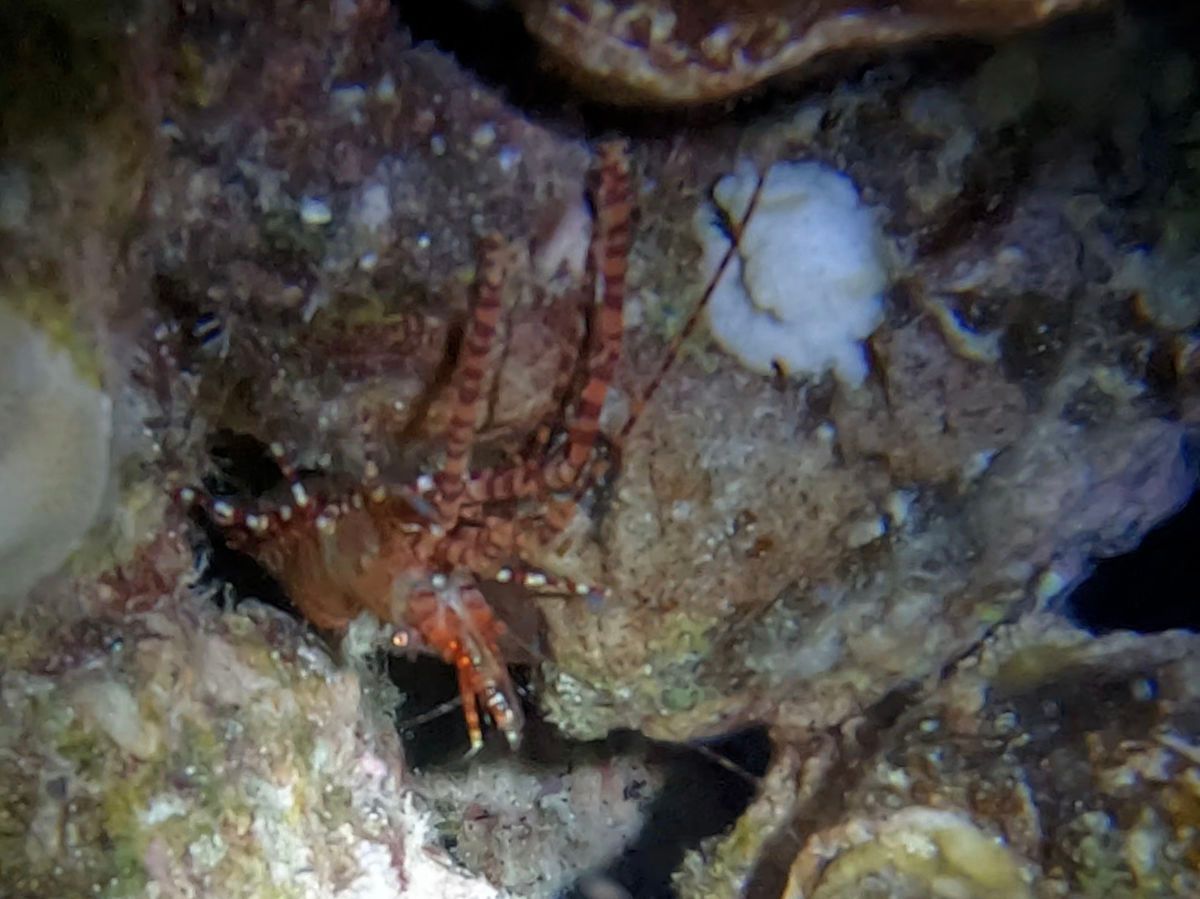
Shrimp Marbled hidden among rocks and coral in underwater scene

One of those animals was the marbled shrimp, tucked back into the reef. Marbled shrimp are primarily nocturnal. During daylight hours, they commonly shelter in crevices between and under coral colonies, emerging after dark to forage. Its mottled coloration provides additional camouflage against the complex surfaces around them. For marbled shrimp and other nocturnal predators, during the day, a crevice is more than an empty hole, it provides a place to disappear while daylight predators are active.


A Coral on the Ceiling

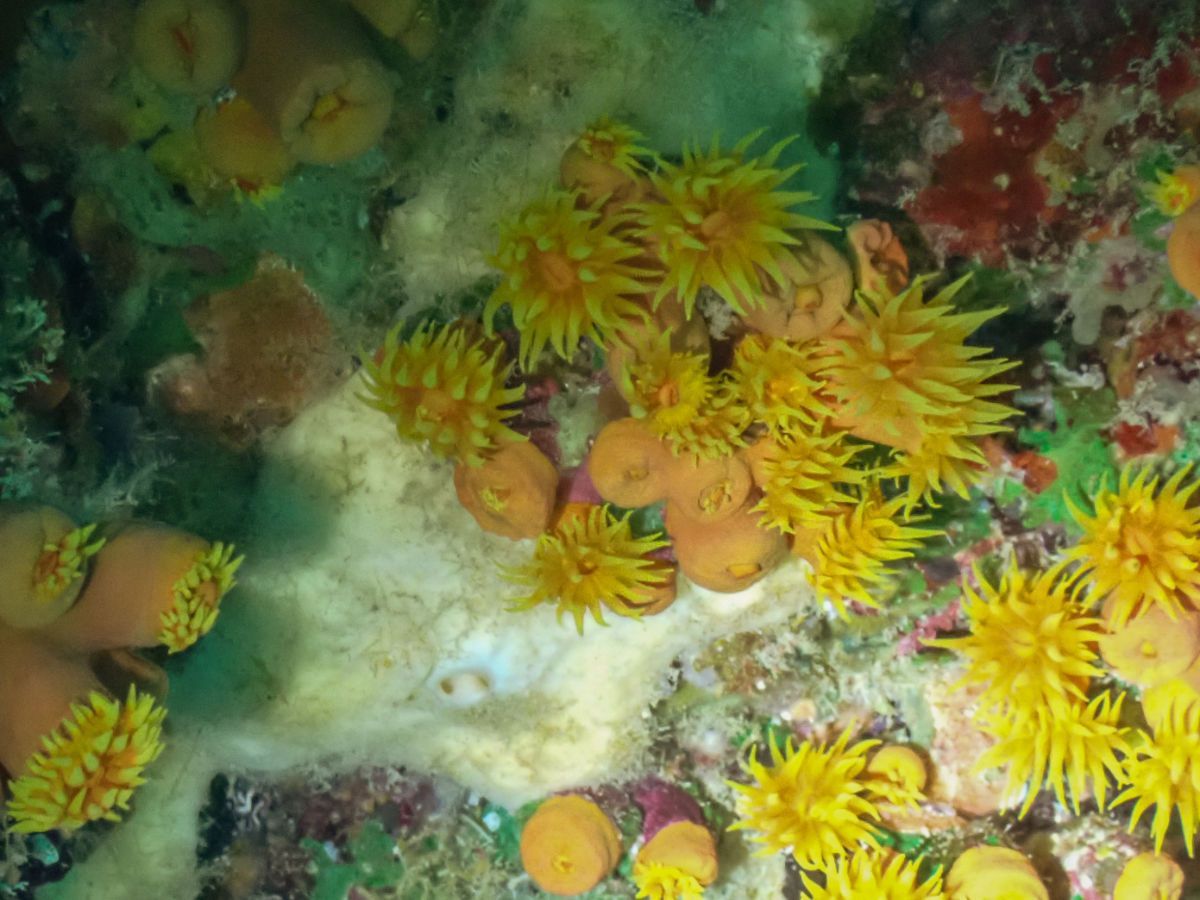
Yellow and orange sea anemones clustered on a coral reef underwater

Inside the lava tubes, we found something different, bright orange colonies of orange cup corals were growing from the ceilings. At first, that seems like a strange place to find a coral. Most of the familiar shallow-water corals in Hawaiʻi receive much of their energy from photosynthesis performed by symbiotic algae living within their tissues. A dark lava tube ceiling would not seem like particularly useful real estate.


However, orange cup corals are different. They are an azooxanthellate coral, meaning they lack the photosynthetic algal symbionts found in many shallow-water corals. Since they do not depend on sunlight as an energy source, they are able to occupy shaded walls, overhangs, caverns, and other low-light habitats. 


Orange cup corals obtain their nutrition by capturing food from the surrounding water. Their polyps extend tentacles into the surrounding water and use specialized stinging cells called nematocysts to immobilize tiny drifting animals and larvae in the water called zooplankton. 


Seeing colonies of orange cup corals growing upside down in a lava tube was a good example of how dramatically an organism’s feeding strategy can influence where it is able to live.


The Trees That Are Actually Worms

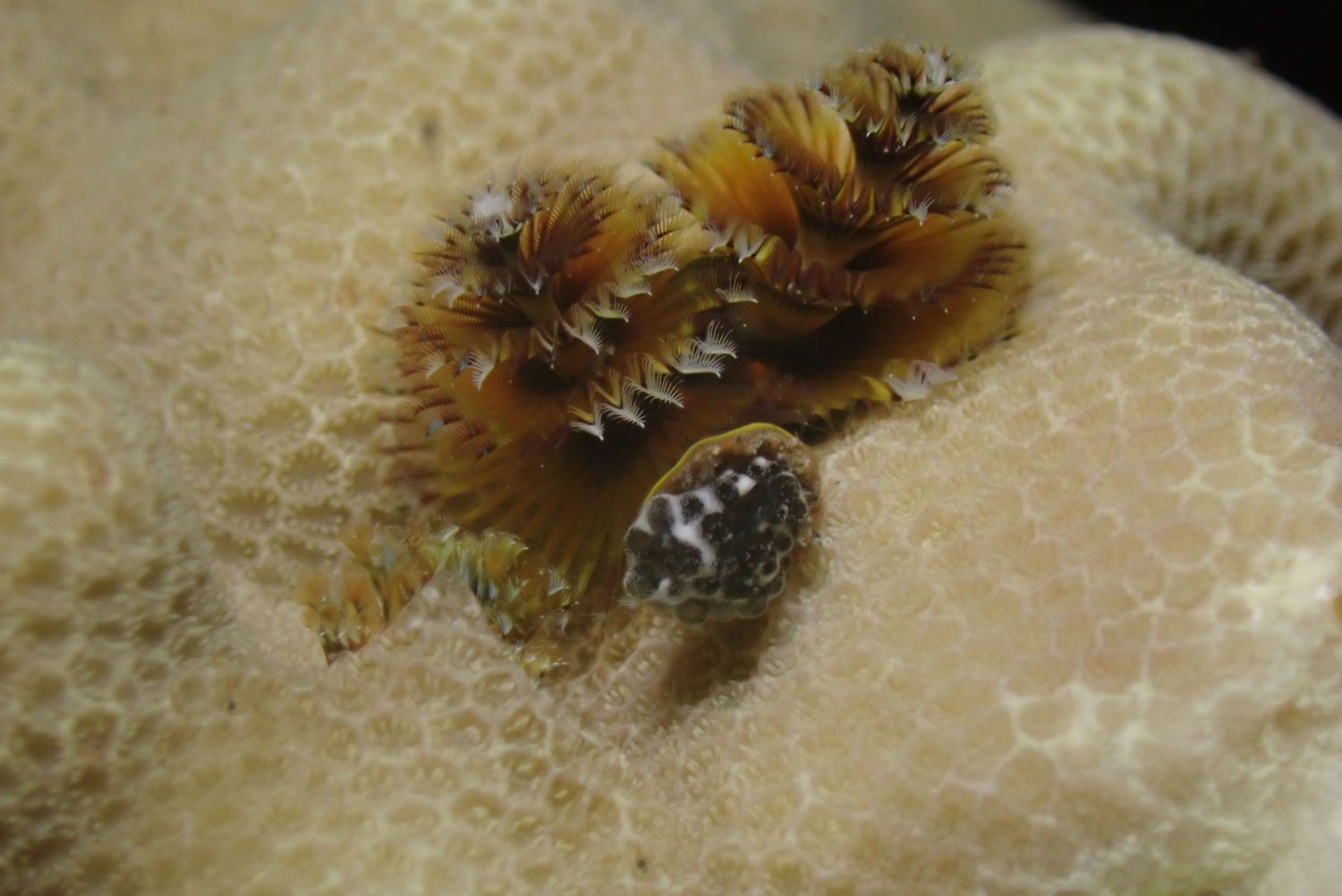
Close-up of Christmas tree worms

Christmas tree worms are easy to notice once you start looking for them, but most of the animal remains hidden. The colorful spirals we see above the coral are specialized structures called radioles, which serve two jobs: respiration and feeding. The worm’s body remains protected within a calcareous tube embedded in the reef. If disturbed, the entire “tree” can disappear almost instantly into that tube. It is another version of life hidden in the reef, an animal remaining protected inside while only the structures it needs to feed and breathe extend into the water.


Hidden Arms in the Reef

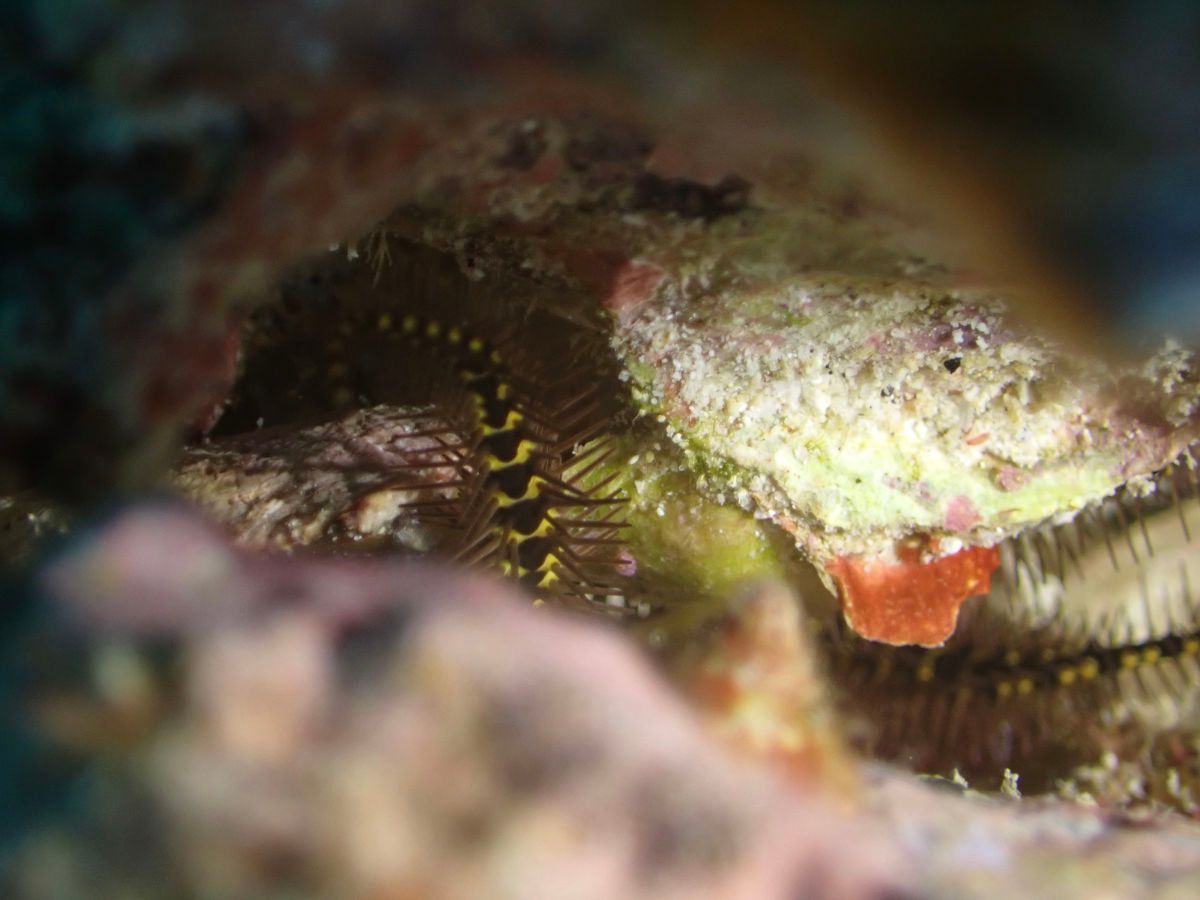
Close-up of a camouflaged fish among rocks, with mottled green and brown scales and an orange fin.

We also found a pied brittle star tucked deep within the reef, with little more than its long arms extending from its hiding place. Like many brittle stars, it uses the reef structure as protection while keeping its feeding surfaces exposed to the water moving past. Brittle stars have rows of tube feet along their flexible arms that can collect suspended particles and pass them toward the mouth on the underside of the central disc. 


It is an easy animal to overlook because most of it may never come into view. What we see reaching from a crack in the reef is only a small part of the animal, positioned where the current can deliver food while the vulnerable central disc remains protected inside. It was another example of how the architecture of the reef allows an animal to be both hidden and connected to the water column at the same time.


A Crab Living Between the Branches

Two small Guard crabs on a green coral reef surface

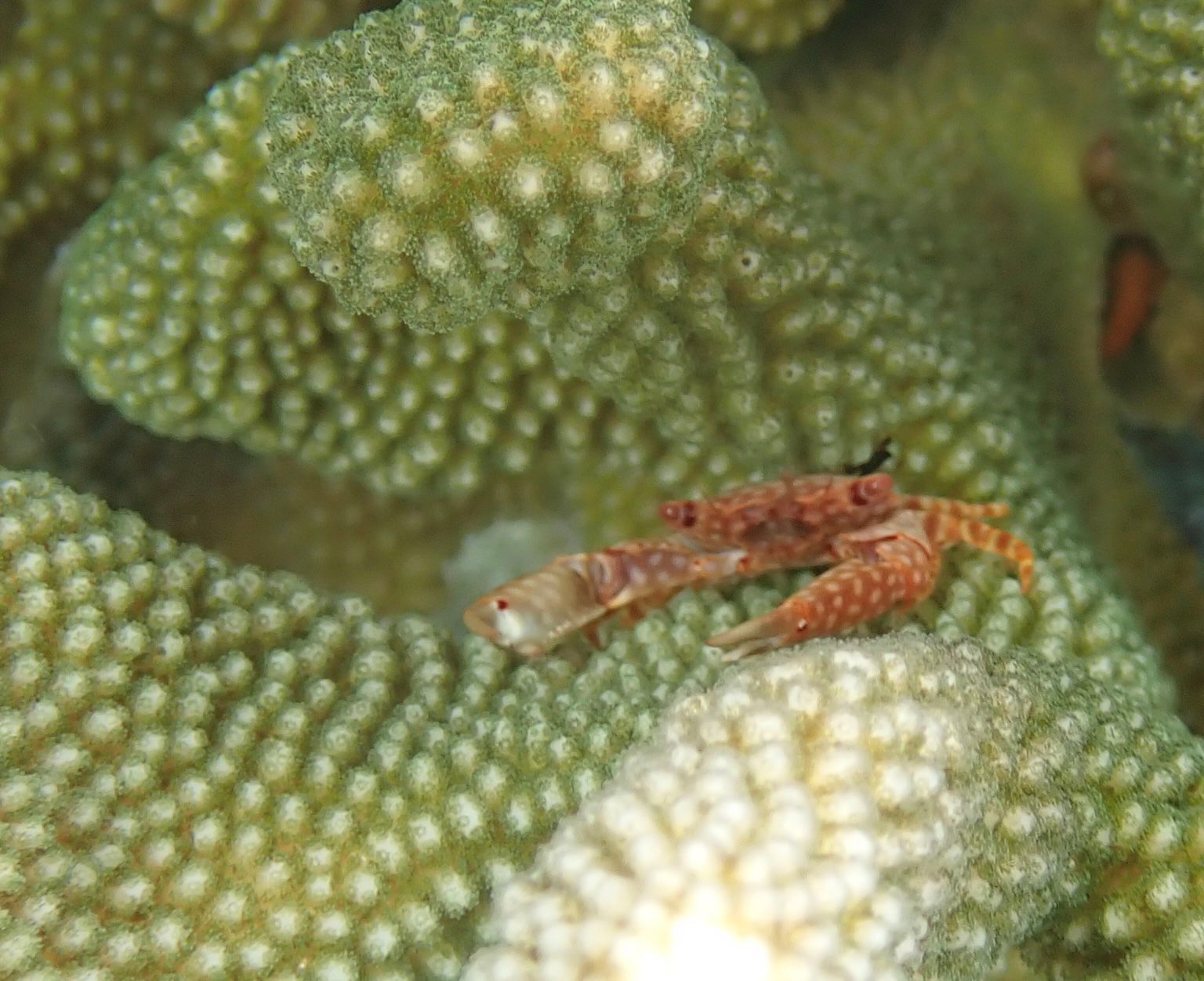
Guard crabs including the yellow spotted guard crab have close associations with antler coral in Hawai’i. The coral provides the crab with shelter and food resources, while the crab removes sediment and defends the colony against some coral predators including crown-of-thorns sea stars. The space between coral branches is the physical setting for a biological relationship called mutualism. 


What We’re Still Wondering

On our dives, Elise observed that christmas tree worms are suspension feeders, but wondered what they actually eat. Their paired branchial crowns or “trees”, composed of feather-like radioles, extend into the water column and intercept suspended particulates carried past by the current. These particles include microscopic, plant-like organisms drifting in the water called phytoplankton and fine organic material.


Their radioles are lined with cilia and mucus-producing surfaces that trap suitable particles and transport them along ciliated grooves toward the mouth. This feeding strategy allows christmas tree worms to exploit suspended food without leaving the protection of its calcareous tube. As I mentioned earlier, these same radioles also function in gas exchange, making the visible “trees” both respiratory and feeding structures.


Our biggest takeaway from the mission was how much larger the reef becomes when we stop looking only at its surface and start looking into the hidden spaces.


Next Science Friday:

Mission 005: Critter Buddy Systems


This coming Friday, September 18th, 2026 we are looking for organisms that have figured out that it pays to have a partner.


Our mission will be to observe interspecific relationships and the interactions between different species to see how organisms can benefit by working, hunting, or even simply spending time together.


Come explore the best diving and snorkeling on the Big Island of Hawai’i by calling us at (808) 882-7774 or book online below.


Happy Diving!
-B


Kohala Divers Science Fridays

Dive curious. Discover what others miss.

Come Dive With Us

Science Fridays happen on our two-site morning charter. Two dives, two different sites, and a mission that gives you something to look for on both of them.


You don't need to be a marine biologist or know the name of every fish. Just bring your curiosity, slow down a little, and start asking questions about what you are seeing. That is really all it takes!


There is always something happening out there. Come find out what.

A white background with a few lines on it
Turquoise parrot fish swimming over a sandy reef beside coral rocks
By Brad September 9, 2026
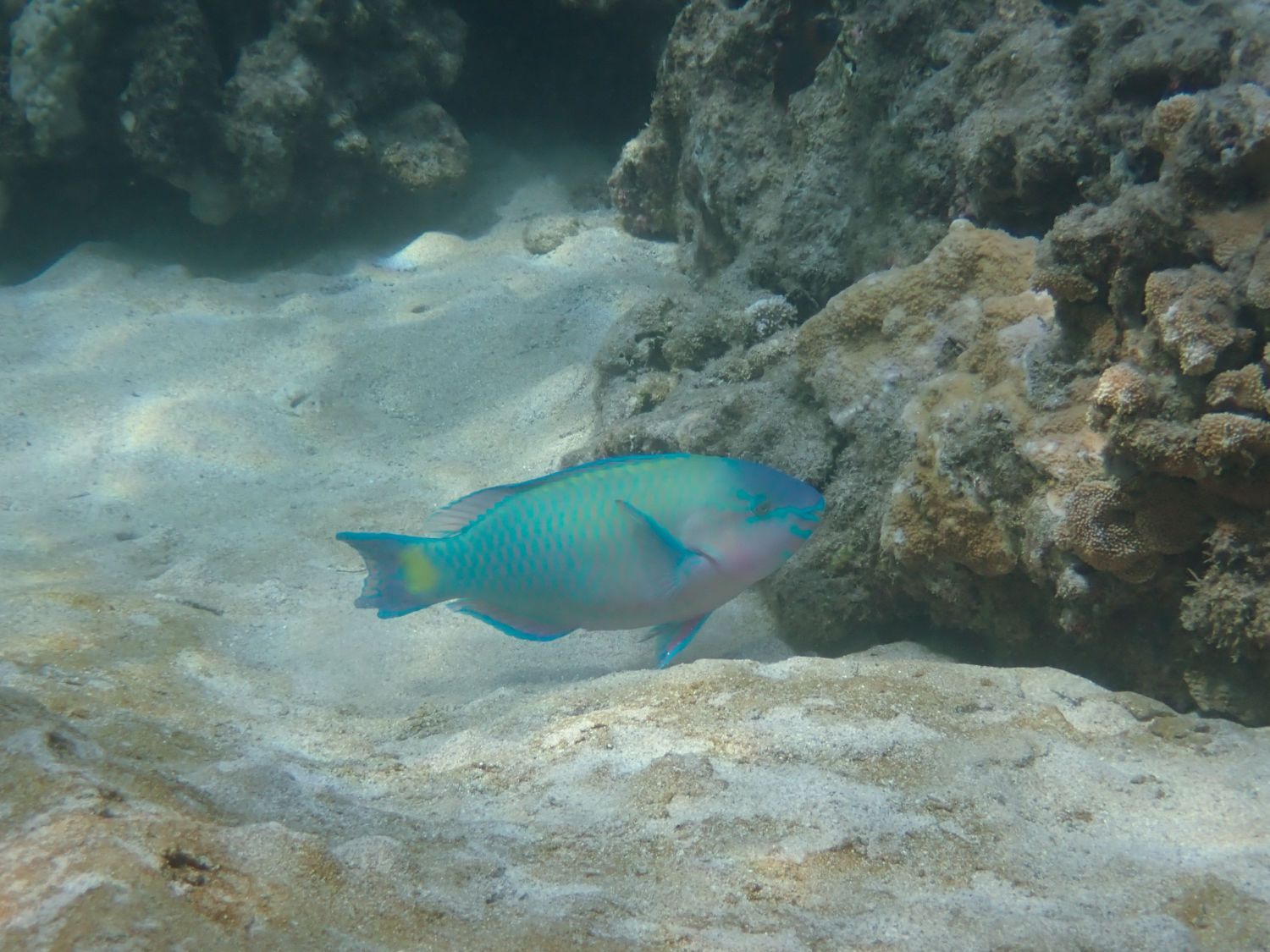
Dive Curious. Discover what others miss. Mission Recap There are a lot of organisms eating algae on a coral reef, but they are not all doing the same ecological job. Rather than simply looking for herbivores, our mission was to observe different grazers and compare how each one removes material from the reef. Over two dives, we came across a variety of grazers, from yellow tangs, to goldring surgeonfish, to parrotfish, to urchins. All of them interact with algae in some way, but once we began paying closer attention to how they feed, the word “grazer” became more complex. Not All Grazers Graze the Same Way Herbivory is one of the processes that helps to shape a coral reef. By removing algae, herbivores can influence how much space and light are available on the reef and which organisms are able to occupy the substrate. But different herbivores target different types of algae and remove them in different ways. Some fish crop algae from the surface, while others scrape tightly attached algal turf from hard substrate. Some browse larger fleshy algae. Sea urchins use a five-toothed feeding structure rasp material from the reef. So instead of asking, “What is eating algae?”, we began to ask a more useful questions: What does each feeding strategy do to the reef surface? Parrotfish Scraping the Reef
By Brad September 2, 2026
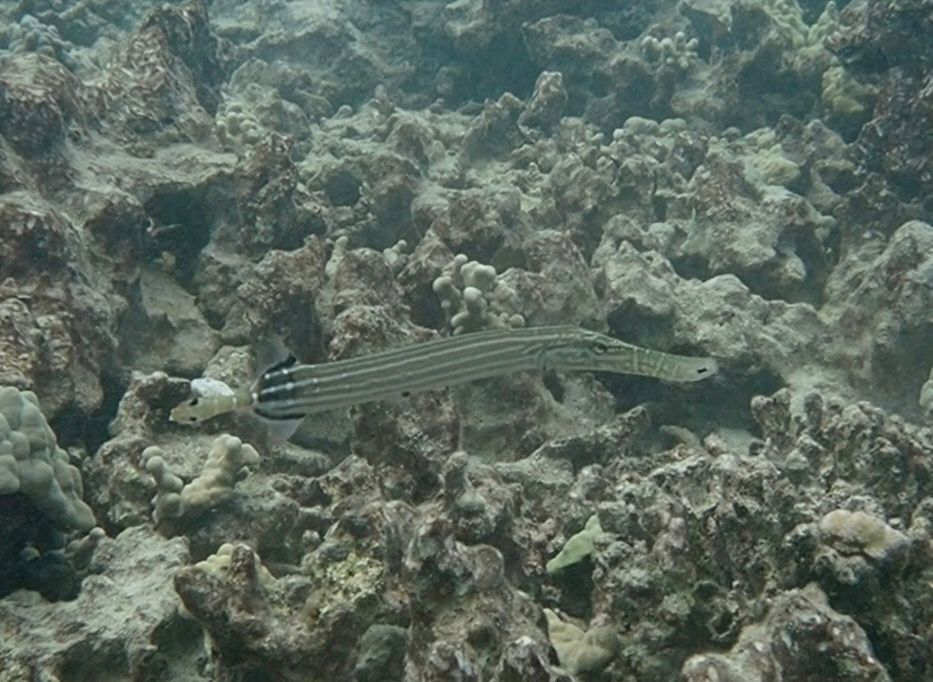
Dive curious. Discover what others miss. Mission Recap Sometimes the best way to survive on a coral reef is to make sure nobody notices you are there. For our second Science Friday, we went looking for critters doing exactly that. Our mission for Masters of Disguise was to observe organisms using different strategies to avoid being noticed. Over two dives, we found marine life disappearing against rocks, changing their appearance, and even covering themselves with material from the reef. However, camouflage isn’t always just about hiding from predators. For some animals being difficult to see helps them get close enough to catch their prey. The Trumpetfish That Changed Before Our Eyes 
By Brad August 25, 2026
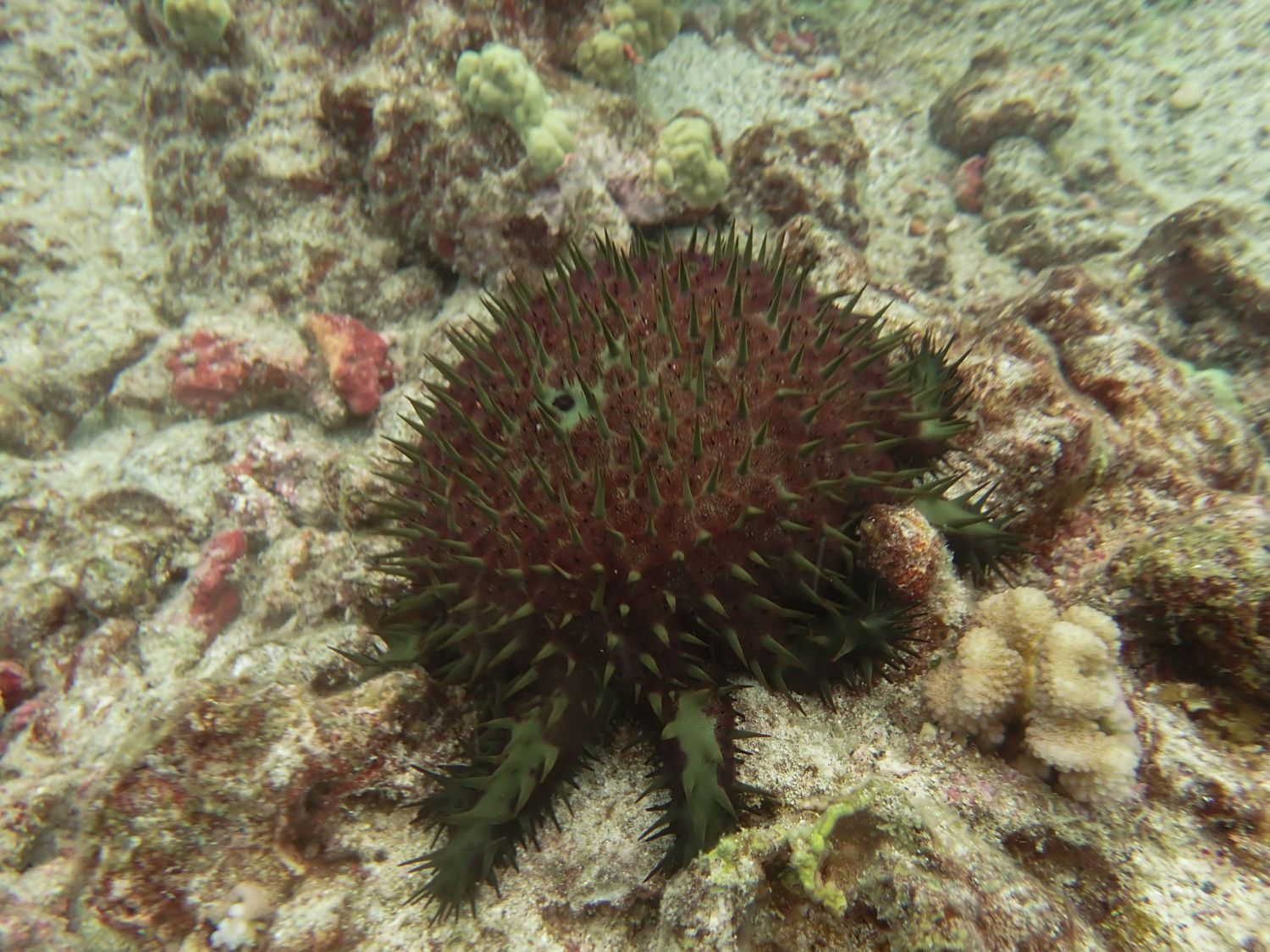
Dive curious. Discover what others miss. Mission Recap Something is always eating on a coral reef. We don't always get to see it happen, but if we know what to look for, we can often find the clues left behind. That was the mission for our first Science Friday: Who Ate That? Rather than simply looking for marine life, we spent two dives looking for evidence of feeding and asking a simple question: Who ate that? Reading the Reef One of the goals of Science Friday is to get us thinking about a coral reef as more than a collection of fish, invertebrates, and substrate. It is a community of organisms constantly interacting with one another. Feeding is one of the easiest ways to begin observing those interactions because even when we don't witness it first hand, often clues are left behind.