

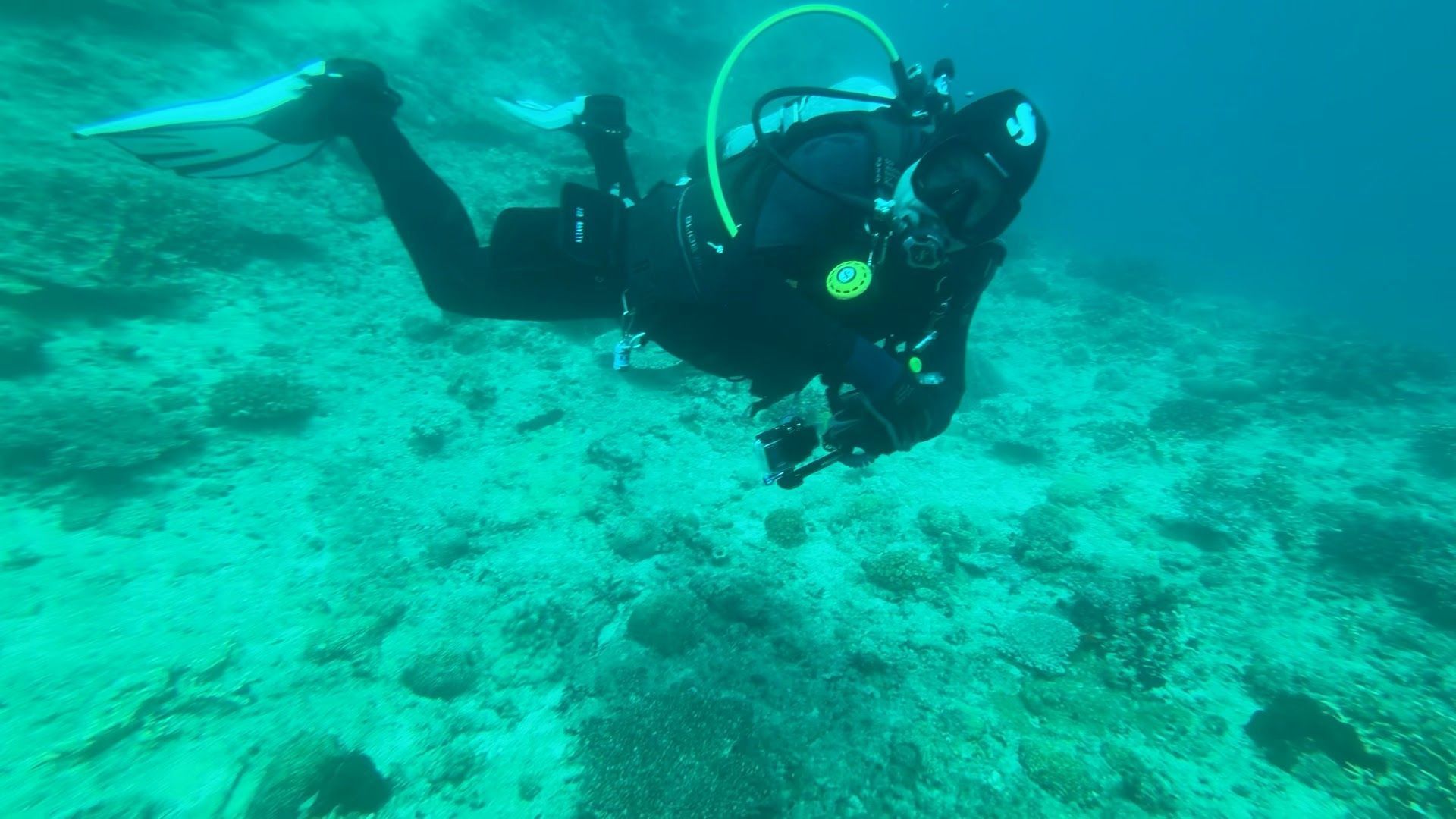
Science Friday 005: Critter Buddy Systems

Brad • September 30, 2026

Dive Curious. Discover what others miss.

Mission Recap

A coral reef can look like a collection of individual animals, each one going about its own business. Spend enough time watching, though, and those boundaries begin to disappear.

For our fifth Science Friday, Critter Buddy Systems, we went looking for interactions between different species. Our mission was not simply to find two animals near one another, but to observe what happened between them and ask an interesting question:

What is each animal contributing to the relationship, and what does each one get in return?

Over two dives, we watched Hawaiian cleaner wrasses cleaning their customers, followed a manybar goatfish hunting alongside a Hawaiian day octopus, and came across blue goatfish positioning themselves around openings in the reef while a whitemouth moray searched through the cracks and crevices beneath them.

Three very different interactions, but all built around the idea that sometimes another species can provide an opportunity that an animal could not create quite as effectively on its own.

When It Pays to Have a Partner

Interactions between different species are known as interspecific interactions and can take on many forms. Sometimes both participants benefit, creating a relationship we describe as mutualism. In other situations, one animal may benefit while the other is largely unaffected, or an animal may simply take advantage of an opportunity created by another species. That distinction became important during this mission because what looks like teamwork underwater is not necessarily the same kind of partnership every time. The first interaction we encountered was one of the clearest examples of mutualism on a Hawaiian reef.

The Reef’s Cleaning Station

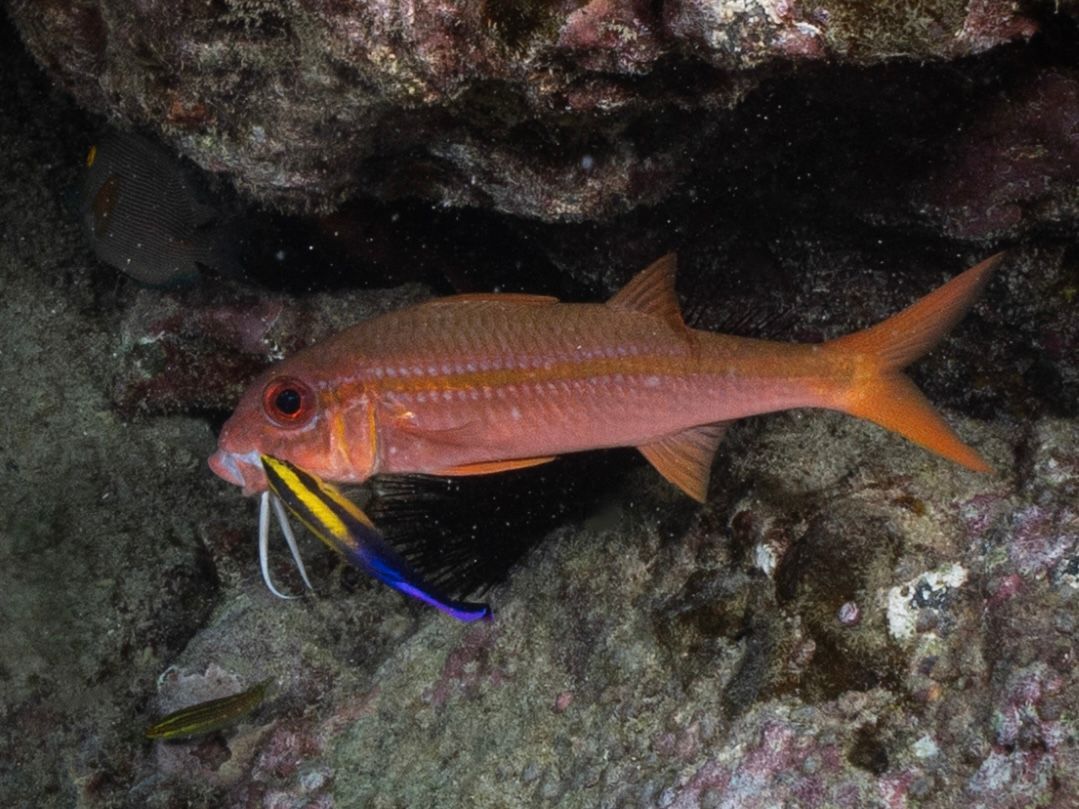
Hawaiian cleaner wrasse cleaning a goatfish at a reef cleaning station

Hawaiian cleaner wrasses, Labroides phthirophagus , are endemic to the Hawaiian Islands, and much of their feeding ecology revolves around other fish. Rather than spending the day searching the reef for conventional prey, cleaner wrasses establish “cleaning stations” where larger fish, the Hawaiian cleaner wrasses’ “customers,” come to be serviced. We watched these “customers” remain remarkably still while the wrasses moved across their bodies. The cleaner wrasse gains access to food, particularly ectoparasites and other material taken from the surface of their customer. The customer, in turn, receives the benefit of having those parasites removed. That exchange makes cleaning interactions one of the classic examples of mutualism on coral reefs.

Hunting with Eight Arms

Hawaiian day octopus hunting on the reef alongside a manybar goatfish

Our next critter buddy system looked very different. We found a manybar goatfish, Parupeneus multifasciatus , moving with a Hawaiian day octopus, Octopus cyanea , as the two searched the reef for prey.

Goatfish are remarkably well equipped for finding food hidden in the bottom. Beneath their chin are a pair of highly sensitive organs called barbels, which contain sensory structures that help them investigate the substrate to locate their prey. The Hawaiian day octopus searches differently. Its flexible arms can probe deeply into cracks and holes, and it can spread its web over portions of reef structure while feeding beneath and between rocks for animals hiding inside. Put those abilities together and an interesting hunting system begins to emerge.

The manybar goatfish can move quickly across the reef and investigate a relatively large area, while the Hawaiian day octopus can reach into spaces that are almost completely inaccessible to the manybar goatfish. Together, they expand their individual effective hunting area and prey avoiding one predator may therefore expose itself to the other.

Cover the Exits

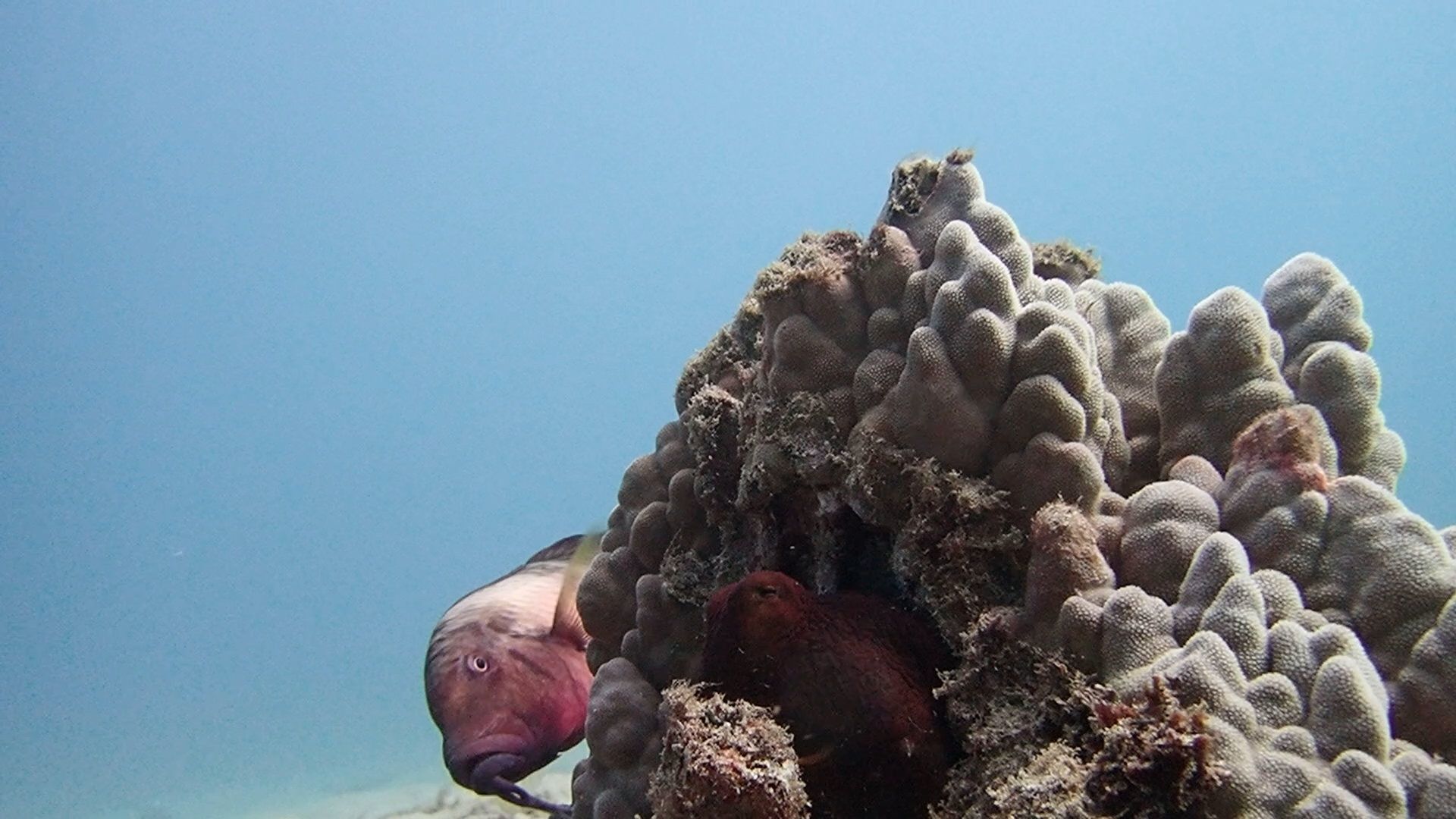
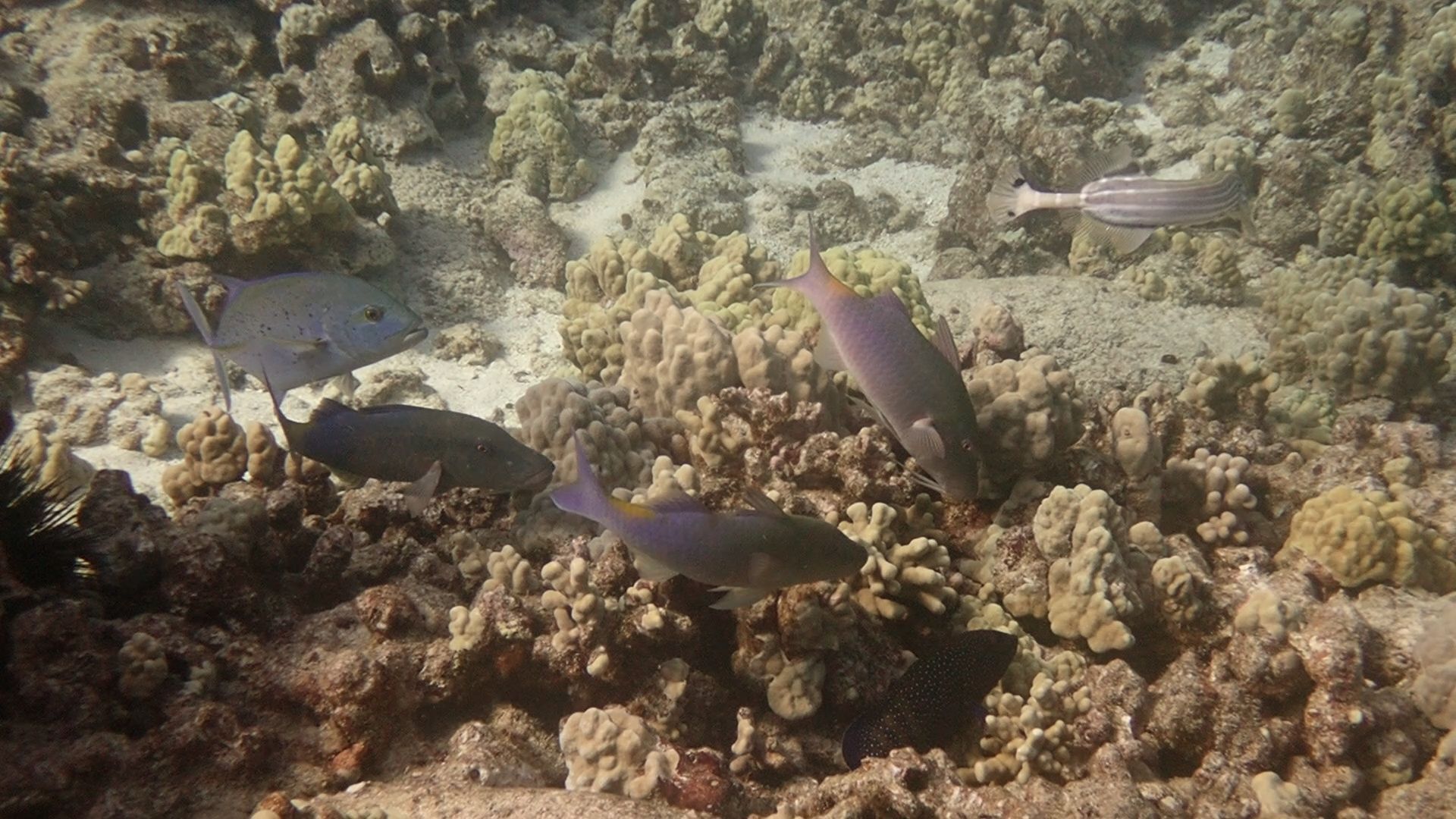
Blue goatfish hovering over openings in the reef

Then we encountered perhaps the clearest example of complementary hunting strategies during the dives. A whitemouth moray, Gymnothorax meleagris , was moving through the reef, repeatedly pushing its head into cracks and holes as it searched inside. Above it were blue goatfish, Parupeneus cyclostomus.

Rather than searching the same holes as the eel, the goatfish positioned themselves around openings in the reef. As the moray worked through the structure beneath them, the fish appeared to be covering possible escape routes.

That behavior is particularly interesting because whitemouth morays are among the Hawaiian morays known to actively hunt during the day. Their long, flexible bodies allow them to search spaces that larger reef fishes cannot enter. In Hawaiʻi, whitemouth morays have been documented hunting in association with goatfish, jacks, trumpetfish and peacock groupers. While the eel searches a cavity, accompanying predators may position themselves around the exits and attempt to capture prey flushed from hiding.

What We’re Still Wondering

Are all critter buddy systems mutualism?

After watching these interactions, it would be tempting to describe every critter buddy system we encountered as mutualism, but biologically, the distinction is not always that simple. Mutualism requires both participants to benefit from the interaction. With Hawaiian cleaner wrasses and their clients, that exchange is relatively easy to recognize. The cleaner wrasse gains a food source by removing ectoparasites and other material from its customer, while the customer benefits from the cleaning service.

Cooperative hunting is more complicated. Two species may combine different hunting strategies in ways that improve the chances of both finding or capturing prey. An octopus, for example, can reach deep into complex reef structure while an accompanying fish can search a much broader area, potentially allowing the pair to exploit more of the reef than either could as effectively on its own. In other cases, however, one predator may simply take advantage of prey disturbed or flushed out by another without contributing much to the hunt itself. Research on mixed-species hunting groups suggests that these interactions can exist along a continuum, from opportunism and exploitation to genuine cooperation, rather than fitting neatly into a single ecological category.

That makes the behavior itself more interesting to watch. Simply seeing two species hunting together does not tell us what their relationship is. We have to pay attention to what each animal contributes. Which one discovers the prey? Does one animal follow or respond to the movements of the other? Does the behavior of one hunter give its partner access to prey it might otherwise have difficulty finding or capturing? Most importantly, does each participant appear to gain something from hunting together?

Those questions are difficult to answer from a single encounter, and perhaps that is the most interesting part. Instead of leaving the dive with a simple label for what we saw, we left with a reason to watch a little more closely the next time we find two very different animals hunting in tandem.

Next Science Friday:

Mission 006: Reef Builders

This Friday, October 2nd, 2026, we’re looking at the animals responsible for building much of the reef beneath us. Our mission is to explore how reef-building corals deposit calcium carbonate, gradually creating the framework that provides habitat and helps dissipate wave energy before it reaches Hawaiʻi’s coastline.

We’ll focus on two closely related Porites species: Lobe coral, Porites lobata , and Mound coral, Porites evermanni. Both are important reef builders and can look remarkably similar at first glance.

The goal is to stop seeing the reef simply as rock beneath us and start seeing it as a living structure that is continually being built.

How can something as small as a coral polyp help create something large enough to influence an entire coastline?

Join us on October 2nd, 2026 to find out, and come explore the best diving and snorkeling on the Big Island of Hawai’i by calling us at (808) 882-7774 or book online below.

Happy Diving!
-B


Kohala Divers Science Fridays

Dive curious. Discover what others miss.

Come Dive With Us

Science Fridays happen on our two-site morning charter. Two dives, two different sites, and a mission that gives you something to look for on both of them.


You don't need to be a marine biologist or know the name of every fish. Just bring your curiosity, slow down a little, and start asking questions about what you are seeing. That is really all it takes!


There is always something happening out there. Come find out what.

A white background with a few lines on it
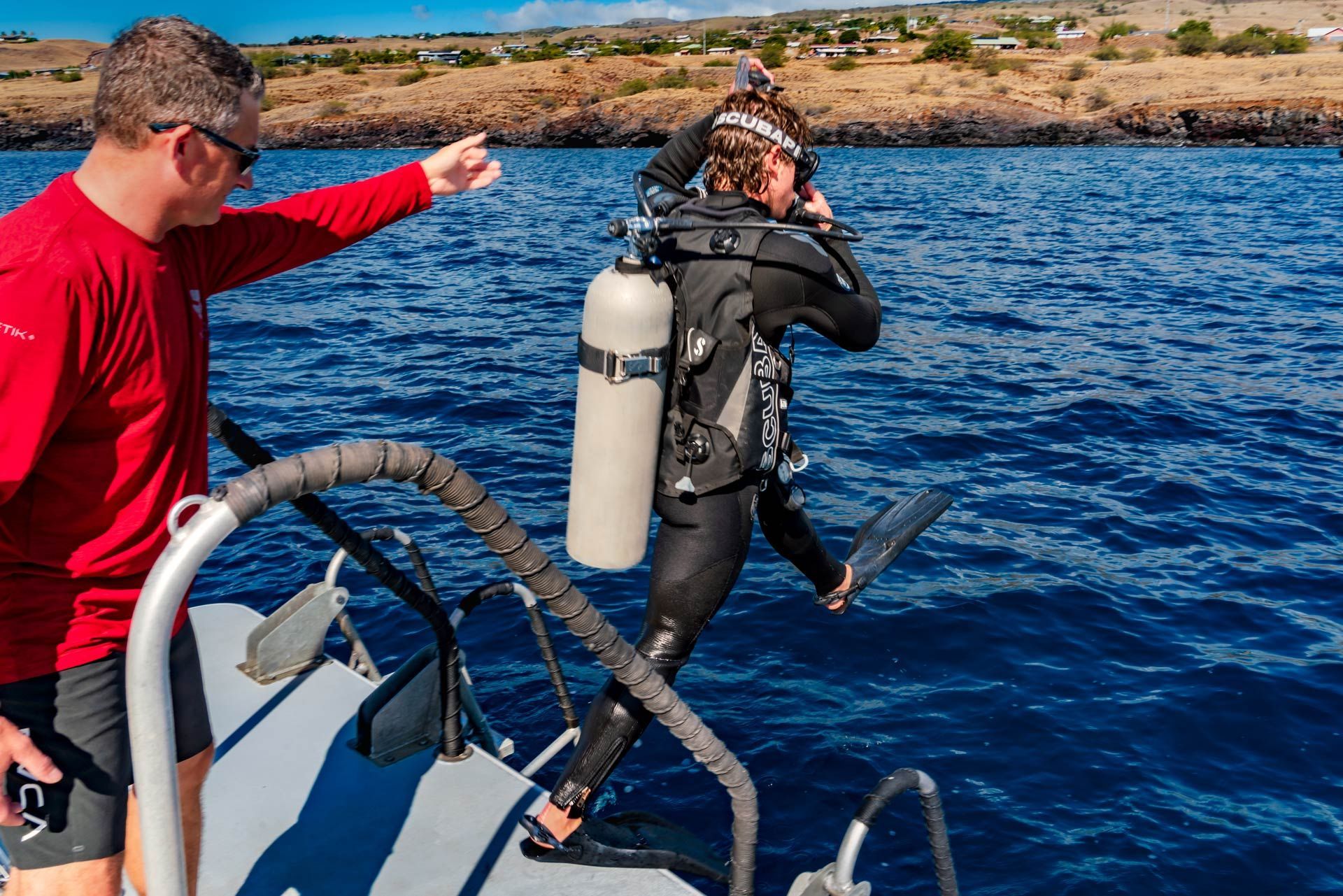
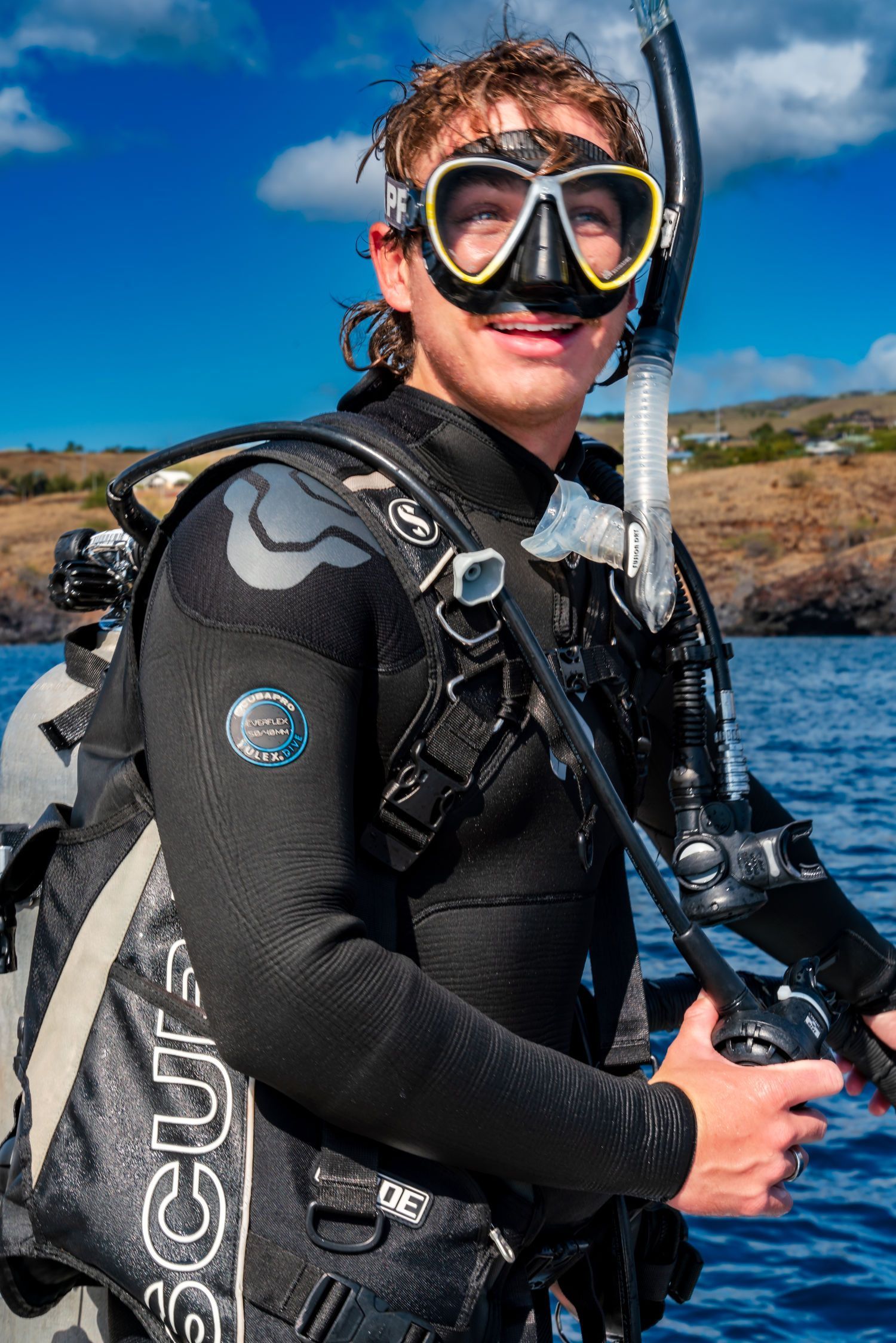
Gunner Ganske, Kohala Coast Dive Buds
By Brad • September 30, 2026
Meet Gunner Ganske, one of our Kohala Coast Dive Buds. Humpbacks at Mahukona, a curious monk seal, floating cash at Kapa'a, and more dive stories.
Close-up of a Worm Christmas Tree
By Brad • September 17, 2026
Dive Curious. Discover what others miss. Mission Recap Most of the animals we notice on a coral reef are the ones swimming above it, crawling across it, or sitting somewhere we can easily see. However, much of the reef community lives somewhere else. That was the mission for our fourth Science Friday: Hidden in the Reef. Instead of looking across the reef, we spent two dives looking into it. We searched beneath ledges, inside holes, between coral branches, along lava tube ceilings, and into the cracks and crevices that can be easy to swim past. Among what we found were marbled shrimp and pied brittle stars tucked deep inside the reef; colonies of orange cup coral growing from lava tube ceilings, christmas tree worms filtering food from the water, yellow spotted guard crab living among coral branches, and even a hawaiian day octopus. A coral reef is filled with small habitats hidden within the larger landscape. A hole only a few inches across can offer protection from predators, while the space between coral branches can provide both shelter and access to food. Beneath an overhang, reduced light creates conditions that favor organisms able to live without direct sunlight, while water moving through a narrow crevice can carry suspended food for animals waiting inside. Ecologists often describe these localized environments as microhabitats. Small differences in light, water flow, exposure, available space, and protection can create very different living conditions within only a few feet of reef, helping determine which organisms are able to live there. Once we started searching those spaces, organisms that are normally easy to overlook began appearing everywhere. Hiding Until Dark
Turquoise parrot fish swimming over a sandy reef beside coral rocks
By Brad • September 9, 2026
Dive Curious. Discover what others miss. Mission Recap There are a lot of organisms eating algae on a coral reef, but they are not all doing the same ecological job. Rather than simply looking for herbivores, our mission was to observe different grazers and compare how each one removes material from the reef. Over two dives, we came across a variety of grazers, from yellow tangs, to goldring surgeonfish, to parrotfish, to urchins. All of them interact with algae in some way, but once we began paying closer attention to how they feed, the word “grazer” became more complex. Not All Grazers Graze the Same Way Herbivory is one of the processes that helps to shape a coral reef. By removing algae, herbivores can influence how much space and light are available on the reef and which organisms are able to occupy the substrate. But different herbivores target different types of algae and remove them in different ways. Some fish crop algae from the surface, while others scrape tightly attached algal turf from hard substrate. Some browse larger fleshy algae. Sea urchins use a five-toothed feeding structure rasp material from the reef. So instead of asking, “What is eating algae?”, we began to ask a more useful questions: What does each feeding strategy do to the reef surface? Parrotfish Scraping the Reef